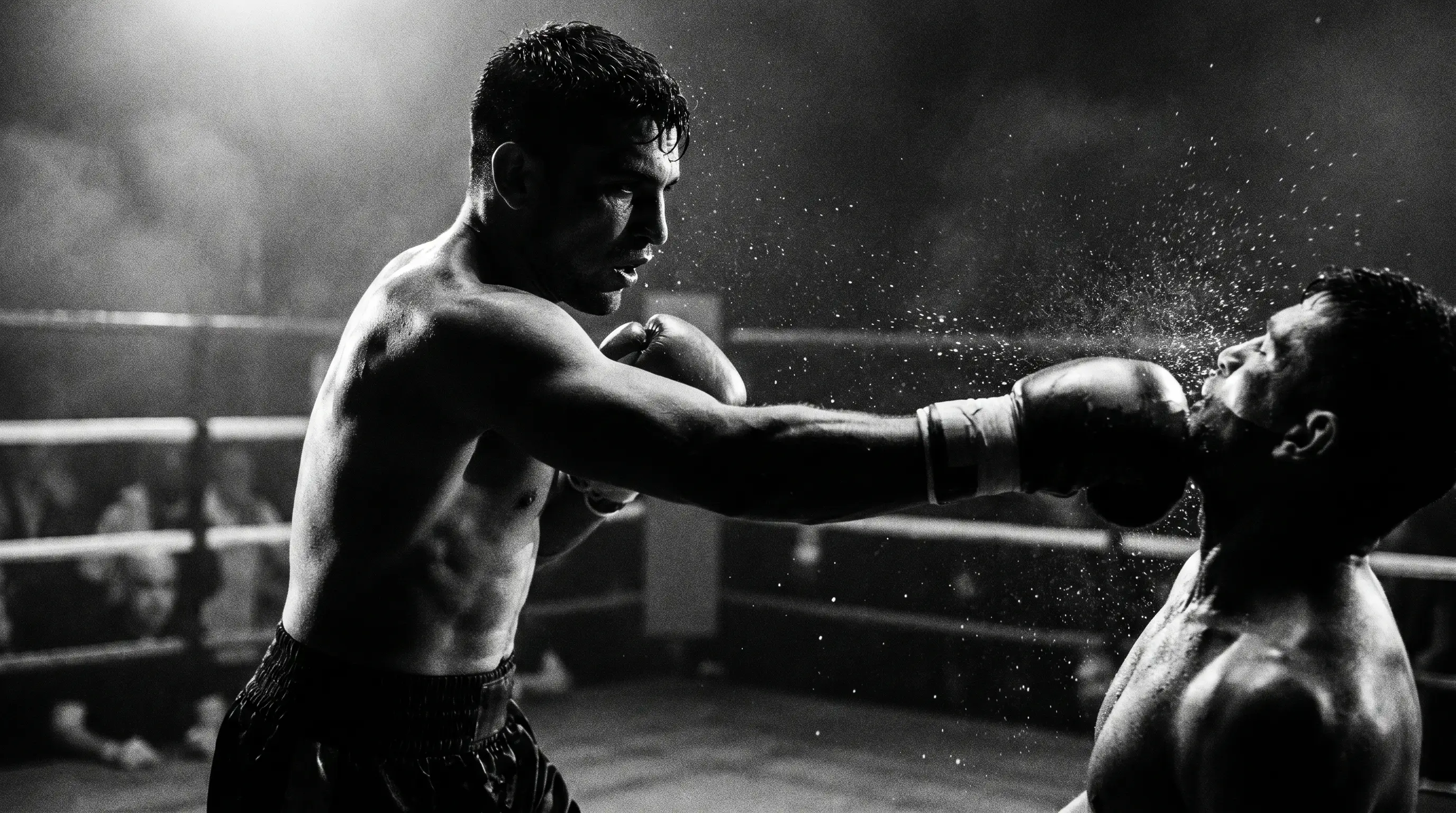
The Uppercut: Boxing's Most Misthrown Punch, Fixed
Everyone loves throwing it, almost everyone throws it wrong. The mechanics, the two ranges where it works, and the drill that fixes the arm-swing habit.
The BOXING OS Desk · Jul 16, 2026 · 5 MIN READ
- ✓Power source: legs and hips driving upward — the arm just delivers it.
- ✓The hand drops inches, not to the waist. Big windups get countered.
- ✓Two working ranges: close against a leaning opponent, mid-range countering a duck.
- ✓At long range the uppercut telegraphs — that's why beginners get countered throwing it.
- ✓Wall drill: back near a wall exposes every windup instantly.
The uppercut is thrown from the legs, not the arm: bend slightly at the knees, drop the punching hand a few inches (not to your waist), then drive upward through hips and legs with the palm turning toward you, targeting the chin or solar plexus. It works at two ranges only — close range against an opponent leaning in, and mid-range as a counter when they duck — and fails at long range where it telegraphs hopelessly. The classic fix for arm-swinging: throw it in slow motion with your back near a wall; if your elbow flares behind you or your hand drops below your ribs, the wall catches the windup.
No punch gets romanticized like the uppercut — and no punch gets butchered as reliably. The gap between the movie version and the real one is the entire lesson.
Where the power actually lives Not the arm. The uppercut is a leg punch: a slight bend at the knees, then an upward drive through the legs and hips, with the fist simply finishing the chain, palm rotating toward you at impact. The classic error inverts this — straight legs, big arm swing from the waist — which produces the look of power and none of the physics.
The drop is inches, not a windup Your punching hand drops a few inches from guard — no further. The waist-level bowling-ball windup telegraphs the punch a full beat early and opens your chin for the entire journey. Shorter drop, more leg: harder punch, safer face.
The two ranges where it works - Close range, opponent leaning in or shelling up: the uppercut travels through the middle of the guard, the one door hooks and crosses can't use. - Mid-range as a counter: the moment an opponent ducks or slips low, the uppercut meets their chin where it's going. This timing is the sweet science at its sweetest. At long range? It telegraphs hopelessly and eats crosses. That's not your uppercut being bad — that's the wrong tool for the range.
The wall drill Slow-motion uppercuts with your back a hand's width from a wall. Every windup — elbow flaring back, hand dropping deep — hits the wall and reports itself. Ten minutes rewires the habit.
The uppercut you can't see coming is the short one. The one you can see coming is the one in the movies.
Drill it in context: combinations that finish with the uppercut, inside a real plan.
FAQ
Why does my uppercut have no power?+
You're throwing it with the arm. Uppercut power comes from a slight knee bend releasing upward through hips and legs — the fist just finishes the chain. If your legs are straight throughout, you're arm-punching, and it will always feel weak.
When should you throw an uppercut?+
Two moments: at close range when an opponent leans or covers up (splitting the guard from below), and at mid-range as a counter the instant they duck or slip low — arriving where their chin is going. At long range it telegraphs and invites counters.
What's the most common uppercut mistake?+
The windup: dropping the hand to the waist and swinging like a bowling ball. It looks powerful, telegraphs completely, and leaves your chin open the whole way. The fix is counterintuitive — a shorter drop with more leg drive hits far harder.
Make it personal to your fight.
Run the free Fighter Check — get your archetype, your Performance System Map and a plan built on what you just read.
Get my System Map →