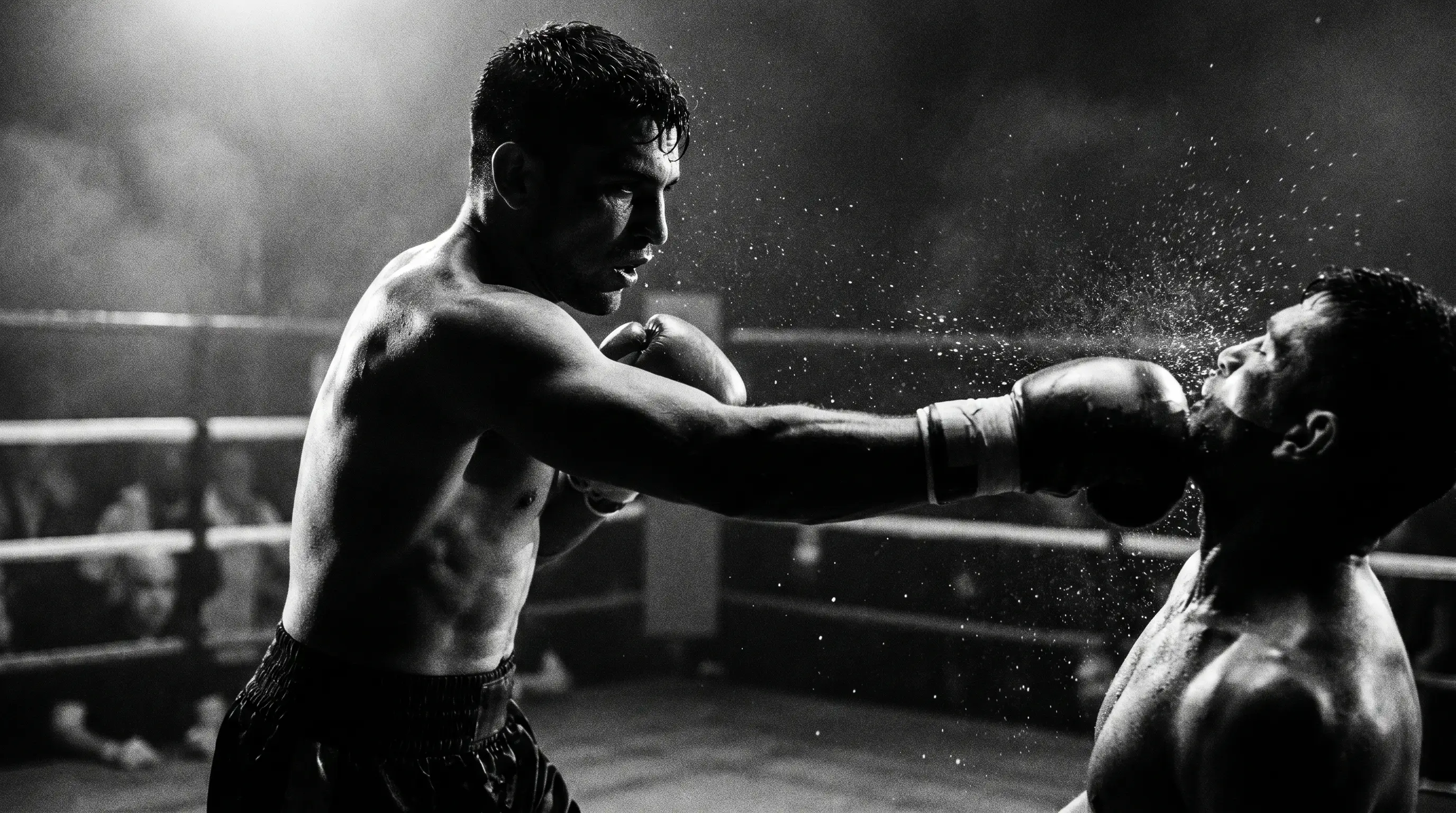
The 5 Combinations Every Beginner Should Own First
Numbered punches, real sequences, and why the 1-2 will still be cashing checks long after fancier combinations bounce.
The BOXING OS Desk · Jun 21, 2026 · 5 MIN READ
- ✓Learn the number system: 1 jab, 2 cross, 3 lead hook, 4 rear hook, 5/6 uppercuts.
- ✓The 1-2 is the spine of boxing — thrown correctly it's most of the sport.
- ✓Good combinations rotate: each punch loads the next (cross turns you into the hook).
- ✓Change levels inside combinations — body-head is the oldest unlock in the book.
- ✓End every combination with defense until it's not a decision anymore.
Boxing numbers the punches — 1 jab, 2 cross, 3 lead hook, 4 rear hook, 5 lead uppercut, 6 rear uppercut — and beginners should master five combinations in order: the 1-2 (jab-cross), 1-1-2 (double jab cross), 1-2-3 (jab-cross-lead hook), 1-2-3-2 (adding the finishing cross), and 1-2 to the body then 3 to the head. Each punch should flow from the rotation of the last, and every combination ends with defense — a slip, roll, or step off the line.
Boxing has a language, and combinations are its sentences. Beginners collect too many too fast — the craft is owning a few so completely they fire without being asked.
The number system 1 — jab. 2 — cross. 3 — lead hook. 4 — rear hook. 5 — lead uppercut. 6 — rear uppercut. Add "B" for body. Every gym on earth speaks some dialect of this.
The starter five 1-2. The atom of boxing. The jab measures and blinds; the cross arrives on the road it built. If you only ever mastered this, you'd still be dangerous.
1-1-2. The double jab breaks rhythm — opponents time single jabs quickly, but the second one scrambles the clock, and the cross lands on schedule chaos.
1-2-3. The cross's rotation loads the lead hook; letting it fly is almost free. This is the first combination that teaches punches as connected rotation, not separate events.
1-2-3-2. The finishing cross rides the hook's return rotation. Four punches, two full body rotations, one flowing figure-eight.
1-2B-3. Jab upstairs, cross downstairs to bend them, lead hook upstairs where their guard used to be. Level change is the oldest trick because it never stops working.
The invisible sixth member Every combination ends with a defensive move — slip, roll, pivot out. Not as an add-on: as part of the combination itself, drilled into the same muscle memory.
Own five sentences before you write poetry.
The combination-flow sessions run all five on the timer, with the defense stitched in.
FAQ
What do the boxing punch numbers mean?+
A shared shorthand: 1 = jab, 2 = cross, 3 = lead hook, 4 = rear hook, 5 = lead uppercut, 6 = rear uppercut. 'B' after a number sends it to the body — a coach calling 1-2-3B wants jab, cross, lead hook downstairs.
How fast should I throw combinations?+
As fast as you can stay technically clean and balanced — no faster. Speed that costs structure is a costume. Rhythm first, then speed grows out of relaxation.
How many combinations should I learn?+
Five, deeply. A beginner with five combinations drilled to reflex — behind a good jab and real footwork — beats a beginner with fifty patterns and no home base.
Related systems
Make it personal to your fight.
Run the free Fighter Check — get your archetype, your Performance System Map and a plan built on what you just read.
Get my System Map →