How to Punch Harder: The Kinetic Chain, Explained
Power doesn't come from the arm. It comes from the floor — and most people leak half of it before the fist ever lands.
The BOXING OS Desk · Jul 2, 2026 · 6 MIN READ
- ✓Power is sequence, not muscle: floor → hip → torso → shoulder → fist, each link firing in order.
- ✓Relaxation is speed, and speed is power — tension before impact is the number-one power leak.
- ✓The rear hip is the engine of the cross; if it doesn't turn, you're arm-punching.
- ✓Med-ball rotational throws are the closest gym transfer to a power punch.
- ✓Heavier isn't harder: technique multiplies force far more than mass does.
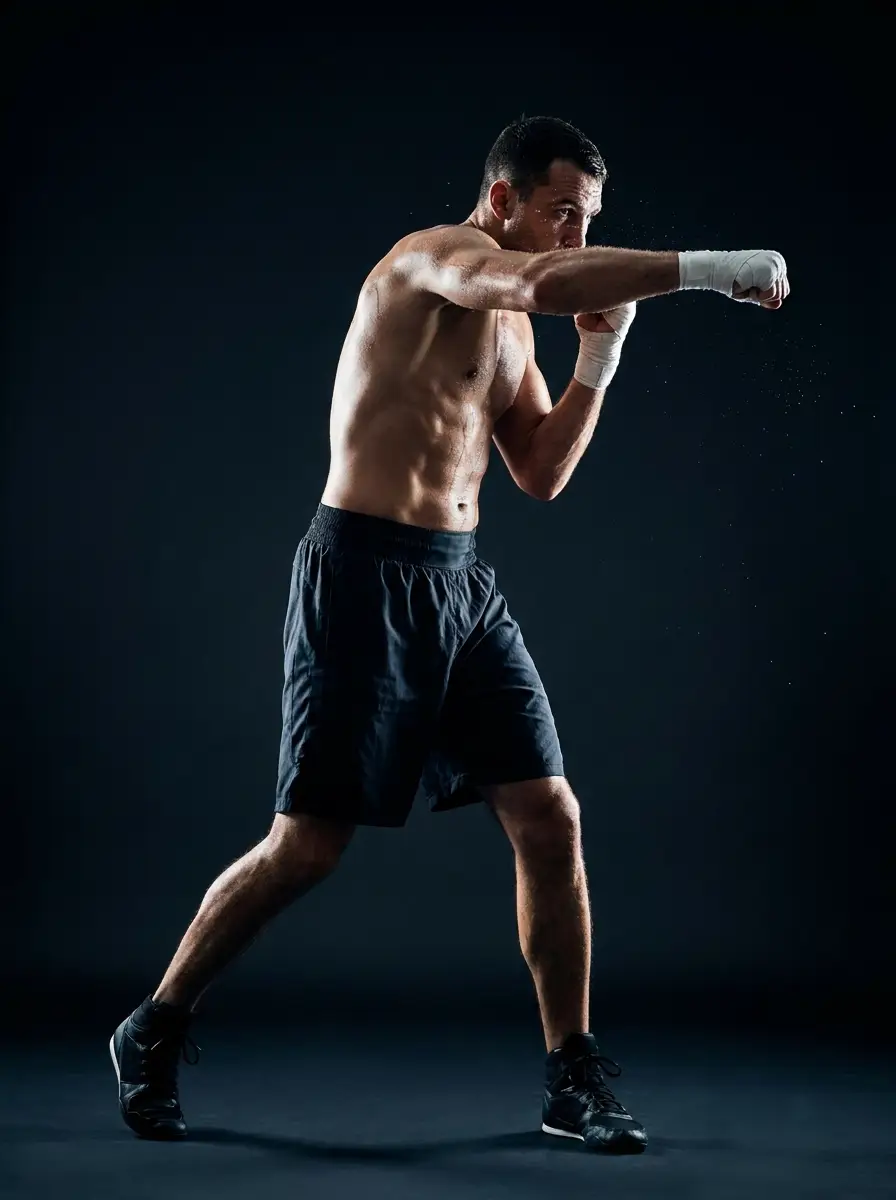
You punch harder by transferring force up the kinetic chain: push off the floor, rotate the hip, let the torso whip the shoulder, and land with a relaxed arm that snaps tight only at impact. The three biggest power leaks are punching with the arm alone, lifting the rear heel without hip rotation, and tensing up before the punch. Train the chain with rotational med-ball throws, jump squats and slow-motion shadowboxing that grooves the hip-first sequence.
Ask ten beginners where a punch comes from and nine will say the arm. That's why nine beginners hit soft.
The chain A hard punch is a wave that starts in the ground. You push off the ball of the foot, the hip fires and rotates, the torso whips the shoulder around, and the arm — loose until the last instant — delivers the payload. Every link that fires in order multiplies the force. Every link that fires late, early, or not at all leaks it.
The three big leaks Arm punching. If your hip finishes after your fist, the punch was all arm. Slow-motion shadowboxing fixes this: exaggerate the hip turning first, ten minutes a day.
The dead rear foot. The rear heel should lift and pivot as the hip drives — like squashing a bug. A flat rear foot means the strongest muscles in your body never entered the punch.
Tension. A clenched fist and tight shoulders from the start act like a handbrake. Elite punchers are almost lazy until the final inches — the snap happens at impact, not before.
Train it - Rotational med-ball throws — hip-led, explosive, both sides. The single best transfer. - Jump squats and explosive push-ups — teach the floor-push that starts the wave. - Slow-then-fast shadowboxing — groove the sequence slow, then let it rip without losing order.
Power is a skill. It compounds like one.
Run the power block in the workout system with the built-in timer, and the sequencing work is already programmed for you.
FAQ
Does lifting weights make you punch harder?+
Indirectly. Strength raises your ceiling, but punching power is expressed through speed and sequencing. Explosive work — throws, jumps, plyometric push-ups — transfers far better than slow heavy lifting alone.
Why do smaller boxers hit so hard?+
Because power is force delivered fast through a braced structure. A lighter fighter with perfect timing, hip rotation and relaxed speed delivers more usable force than a tense heavyweight arm-punching.
How long does it take to develop real power?+
The sequence itself can improve in weeks with focused shadowboxing and throw work. Owning it under fatigue and pressure — where it actually matters — takes months of rounds.
Related systems
Make it personal to your fight.
Run the free Fighter Check — get your archetype, your Performance System Map and a plan built on what you just read.
Get my System Map →