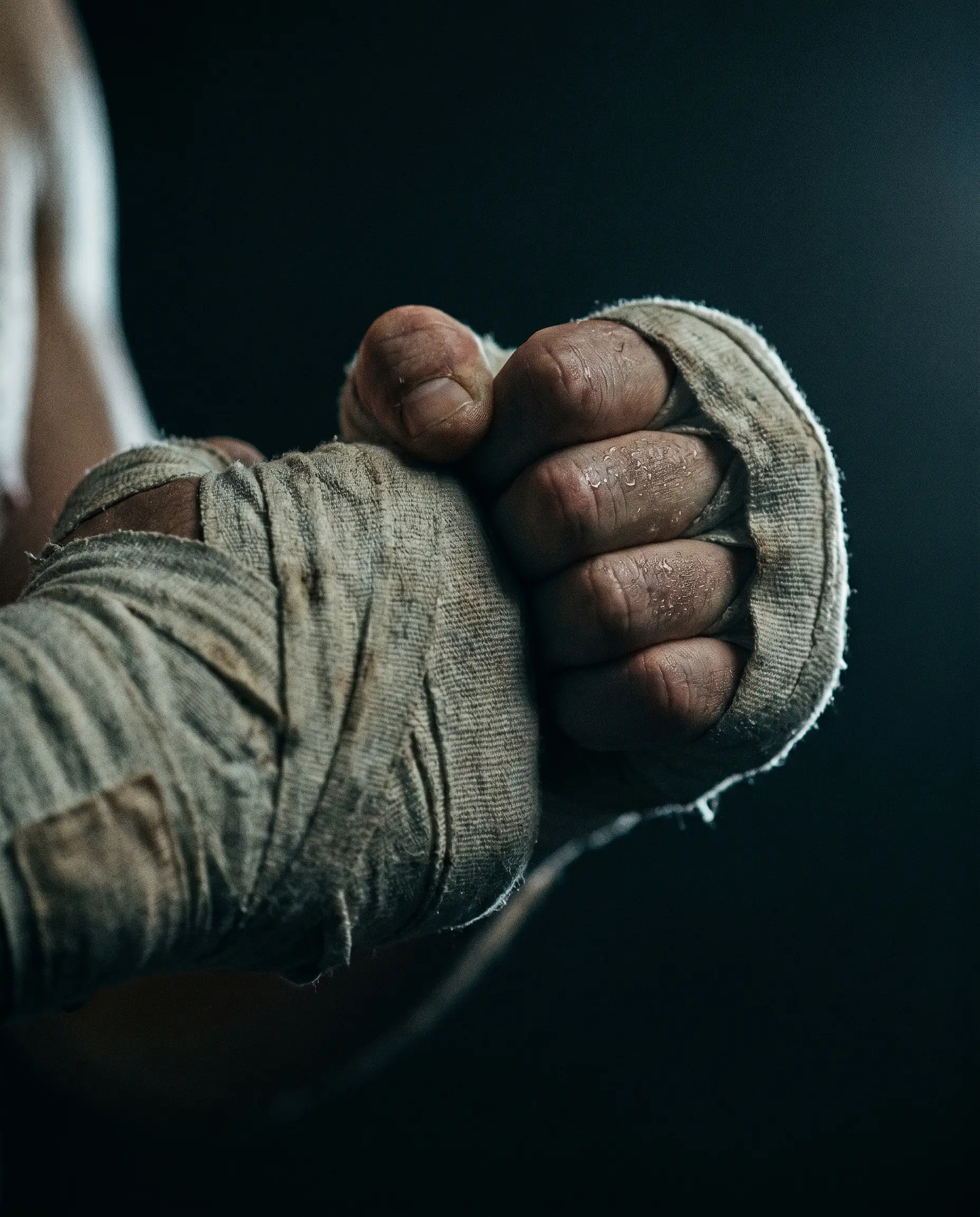
The Monster's Secret: Why Inoue's Power Doesn't Make Sense (Until It Does)
Small divisions aren't supposed to produce this. The mechanics — not the muscles — behind boxing's most concussive little man.
The BOXING OS Desk · Jun 26, 2026 · 5 MIN READ
- ✓Power is a technique stack: perfect sequencing, zero leaks, full ground connection.
- ✓Timing doubles force — his best shots land on opponents moving IN.
- ✓Placement beats poundage: the jaw hinge and the liver, not the forearms.
- ✓He chooses moments to fully sit down on punches — power as a decision, not a default.
- ✓The lesson scales to any weight: your hardest punch is a timing-and-placement product.
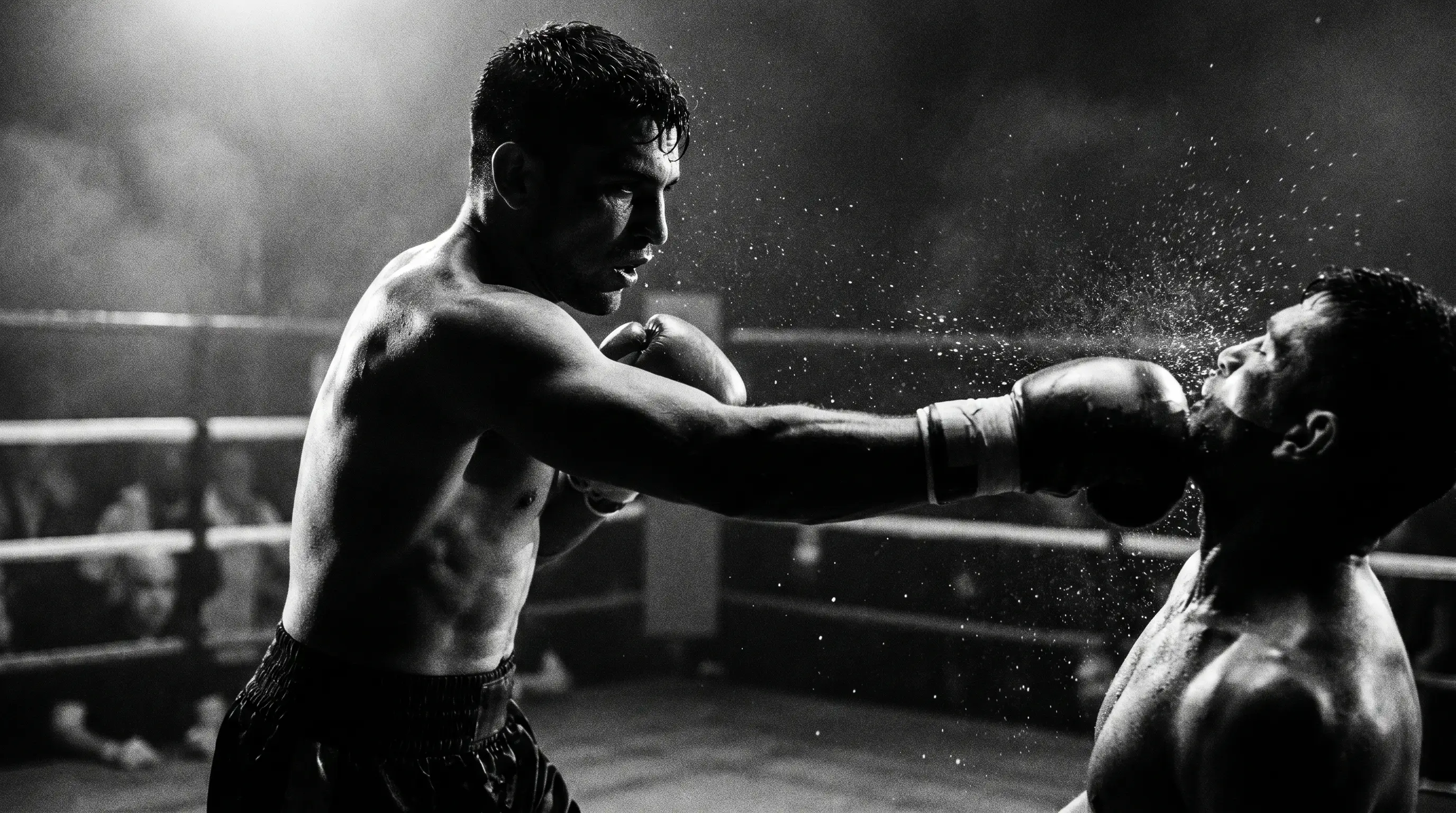
Inoue's outsized power comes from mechanics, not mass: a perfectly sequenced kinetic chain that leaks nothing, punches timed to land as opponents step in (their momentum added to his), placement targeting the chin's hinge and the liver rather than the guard, and elite shot selection that means his hardest punches land clean rather than on arms. He also sits down on shots at moments others stay mobile — a calculated exchange of a defensive beat for full weight transfer.
Every era gets one — a fighter whose punches read as a typo. Too much effect for the listed size. The temptation is to file it under mystery. The film says otherwise: it's a checklist, executed at a level nobody else sustains.
The checklist Nothing leaks. From the ball of the rear foot to the second knuckle, the chain fires in exact order and every joint passes force forward instead of bleeding it sideways. Most fighters leak at the hip or punch early with the arm. The film shows him leaking nowhere.
The oncoming toll. His most violent moments happen when opponents step in — their mass plus his mass, arriving in the same collision. That's not luck; he draws entries specifically to tax them.
Real estate. Punch force means little on a forearm. The shots that end nights land on the jaw's hinge and under the ribs — placement earned through feints and patience, so the clean landing rate stays absurd.
The chosen moment. Watch the finishing sequences: the mobility pauses, the knees bend, the whole man briefly sits down into the shot. A defensive beat, spent on purpose, for a full-weight withdrawal.
What it means for the rest of us Your hardest punch probably isn't a strength problem. It's a sequencing, timing and placement problem — three trainable things pretending to be genetics.
The Monster is mostly homework.
The knockout-power block trains the chain, the timing and the sit-down — in that order.
FAQ
Why does Inoue hit so hard for his size?+
Because punch force is mostly velocity and sequencing, not bodyweight. His kinetic chain fires in perfect order with no energy leaks, he times shots against opponents' forward momentum, and he places punches on knockout real estate — the jaw's hinge, the liver — rather than on the guard.
Is that kind of power trainable?+
The mechanical share of it, yes: sequencing drills, med-ball throws, timing work against moving targets. The genetic share — rate of force development — varies. But most fighters operate so far below their mechanical ceiling that training the chain adds real, felt power.
What is 'sitting down on punches'?+
Momentarily committing full weight into the floor connection as the punch lands — knees bent, base planted — instead of staying light for mobility. It transfers maximum force at the cost of a defensive beat, which is why it's a chosen moment, not a habit.
Related fighters
Related systems
Make it personal to your fight.
Run the free Fighter Check — get your archetype, your Performance System Map and a plan built on what you just read.
Get my System Map →