The Philly Shell: Boxing's Coolest Defense, Honestly Assessed
The shoulder-roll defense looks effortless when masters do it. What the Philly shell actually is, how it works, and the honest prerequisites before you adopt it.
The BOXING OS Desk · Jul 17, 2026 · 5 MIN READ

- ✓The architecture: lead shoulder guards the chin, lead arm bars the body, rear hand patrols the face.
- ✓The engine: rolls and parries leave both hands free — counters launch instantly.
- ✓The honest cost: its holes are covered by anticipation, not padding — timing is the armor.
- ✓Known weaknesses: fast lead hooks around the shoulder, and southpaws break its geometry.
- ✓Prerequisite honesty: classic-guard fundamentals first; the shell is a graduate course.
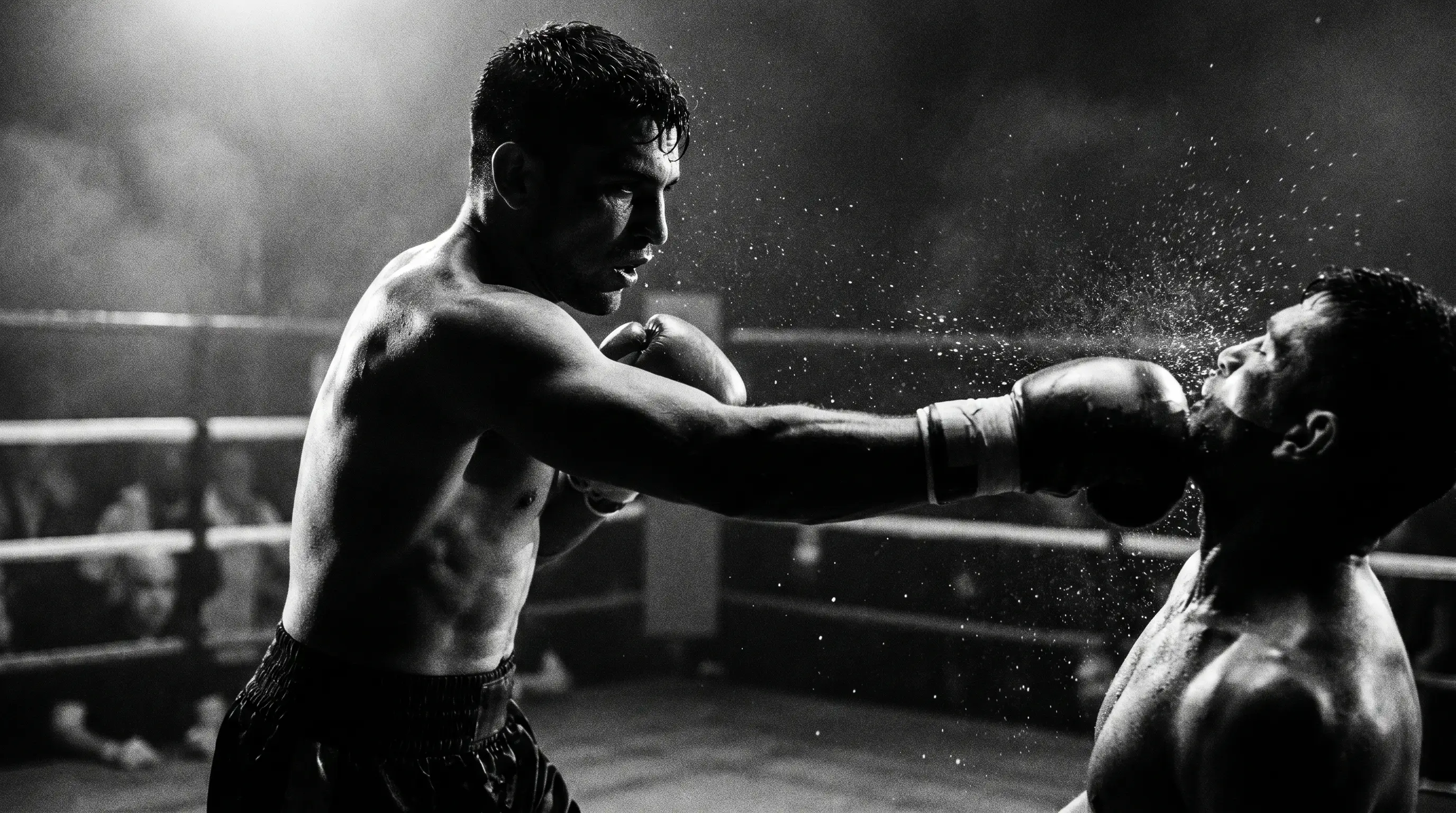
The Philly shell (shoulder roll): lead shoulder raised guarding the chin, lead arm across the midsection, rear hand by the face — a counter-punching defense where the lead shoulder rolls incoming rear hands off while the rear hand parries jabs, keeping both your hands free to counter instantly. Its strengths: unmatched counter-opportunities and energy efficiency. Its honest costs: it demands elite timing and reads (the guard has holes that anticipation must cover), struggles against fast hooks around the shoulder and southpaws (the geometry breaks), and takes far longer to learn than the standard guard. Prerequisites before adopting it: solid fundamentals in the classic guard, above-average reflexes and reads, and a counter-punching temperament.
No defense in boxing has more YouTube tribute videos — and more gym casualties — than the Philly shell. Both facts come from the same truth: it's a genius system with a steep admission price.
The architecture Lead shoulder raised to the chin — the primary shield. Lead arm across the midsection — the body bar. Rear hand at the face — the jab patrol. The stance angles more side-on than the classic guard, presenting the shoulder to the opponent's power hand.
The engine: defense that loads offense Here's why masters love it: every defensive action leaves both hands free. The rear hand that parries a jab is already chambered to return over it. The shoulder that rolls a cross has loaded your own right hand via the same rotation — the legendary roll-and-return that made the style famous. Where the high guard absorbs and then resets, the shell deflects and fires in the same beat.
The honest bill The shell's holes aren't covered by padding — they're covered by anticipation. Its known leaks: fast lead hooks arcing around the raised shoulder, high-volume pressure that outpaces the reads, and southpaws, whose reversed geometry un-aims the entire architecture. Timing is the armor; on a slow night, the armor stays home.
The prerequisites, honestly Classic-guard fundamentals until they're automatic. Above-average reflexes and — more important — reads: the shell defends punches early, at the recognition stage. A counter-puncher's patience. And ideally a coach who genuinely teaches it, because the difference between the shell and a dropped lead hand is about four details per second.
The Philly shell isn't a defense you use. It's a defense you graduate into.
The style family it belongs to: train the shoulder-roll system — and the blocking-vs-parrying basics that come first.
FAQ
How does the Philly shell work?+
Incoming rear hands are rolled off the raised lead shoulder (turning with the punch to deflect it), jabs are parried by the rear hand, and body shots meet the lead arm's bar — all without tying your hands into a shell. The payoff: you're always positioned to counter instantly, especially the shoulder-roll-and-return-right that defines the style.
Why doesn't everyone use the Philly shell?+
Because its protection is skill-based, not structural: where the classic guard blocks by coverage, the shell defends by anticipation, timing and precise small rotations. Without elite reads it leaks — famously to fast lead hooks and against southpaws, whose angles break its geometry. It's a masters' tool that punishes apprentices.
Should a beginner learn the shoulder roll?+
Learn its mechanics as education, but fight from the classic guard until fundamentals are automatic. The honest sequence: high guard competence first, then head movement, then — if your temperament runs to counter-punching and your reads are sharp — the shell as a specialization, ideally under a coach who actually teaches it.
Make it personal to your fight.
Run the free Fighter Check — get your archetype, your Performance System Map and a plan built on what you just read.
Get my System Map →