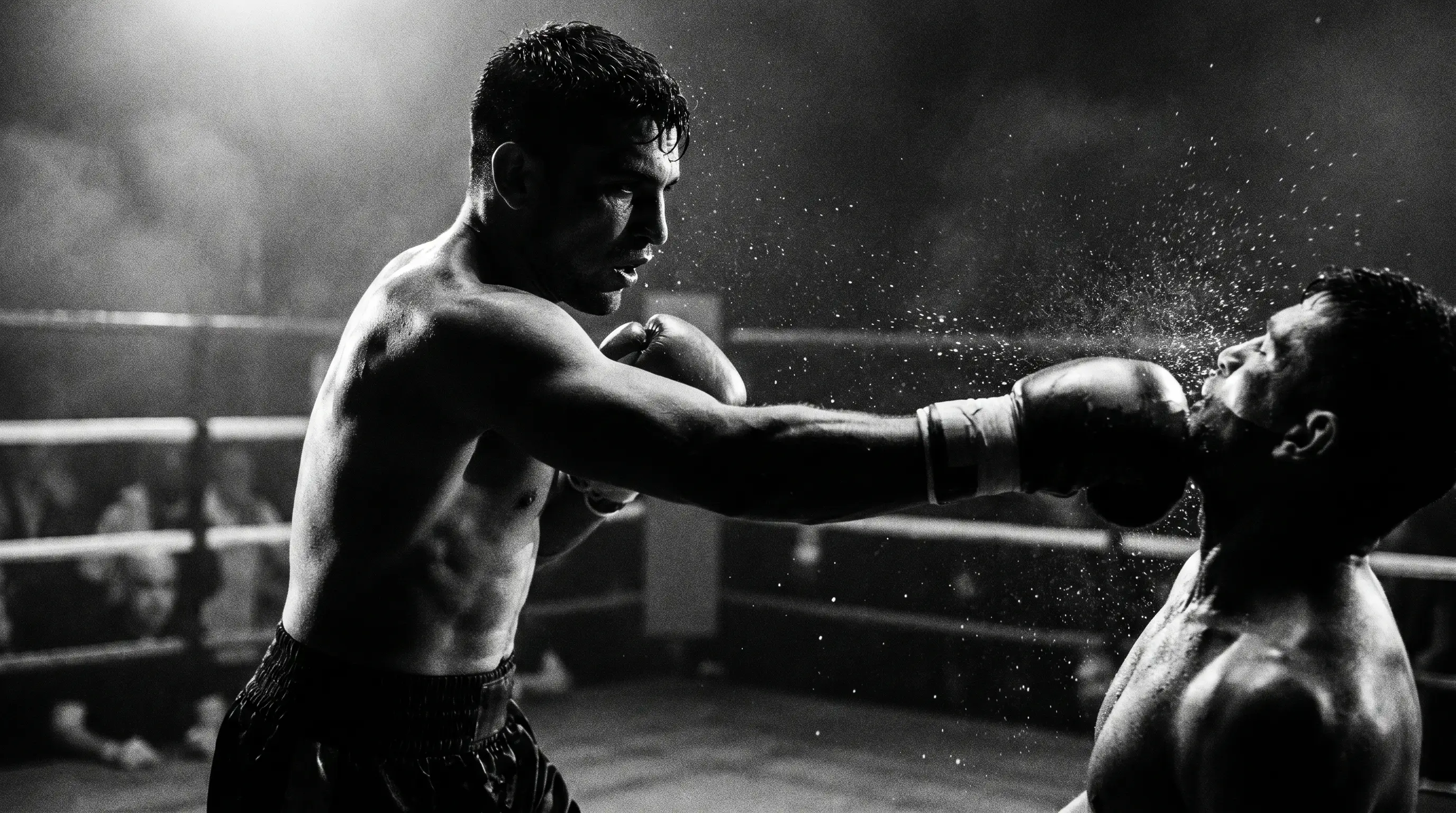
Partner Drills: The Bridge Between Bagwork and Sparring
The missing middle of most boxing development — cooperative partner drills that install timing and defense before sparring tests them. Six drills that build fighters.
The BOXING OS Desk · Jul 17, 2026 · 5 MIN READ

- ✓The missing middle: bags build punches, sparring tests everything — drills install the in-between.
- ✓Jab-only rounds teach distance and timing at a fraction of sparring's risk.
- ✓One-attacks-one-defends gives pure defensive reps sparring never allows.
- ✓Touch sparring teaches flow and composure with fear removed from the equation.
- ✓Constraint is the teacher: each drill isolates one skill by forbidding everything else.
Partner drills — cooperative, constrained exercises with a live human — are the bridge most self-trained boxers miss between bagwork and sparring. The core six: jab-only exchanges (both fighters, jabs only — teaches distance and timing at low risk), the slip line (partner throws slow straights, you slip without moving your feet), touch sparring (open-hand taps, all targets, teaches flow without fear), one-attacks-one-defends rounds (defender may only block/parry/slip — pure defensive reps), body-only sparring (removes head risk while teaching inside position), and counter-for-counter (A jabs, B counters, A counters the counter — timing chess). Each installs a specific skill at controlled risk; together they make first sparring a test you've already studied for.
Most self-trained boxers own two gears: alone with a bag, or thrown into sparring. The development that separates gym-built fighters lives exactly in between — cooperative drills with a live partner, where skills install before pressure tests them.
Why constraint teaches Sparring is the whole exam at once; nobody learns well mid-exam. Drills work by forbidding almost everything — and the one allowed skill, repeated against a live human, installs at a depth bags can't reach. The constraint isn't training wheels; it's the curriculum design.
The core six - Jab-only rounds. Both fighters, jabs alone. Suddenly it's all distance, timing and feints — the fight's foundation, isolated, at a tenth of sparring's risk. - The slip line. Partner feeds slow, honest straights; you slip — feet planted, eyes open. Head movement's multiplication tables. (The solo version preps this.) - Touch sparring. Open hands, touch contact, full movement. The flow and reads of sparring with fear unsubscribed — composure grows here faster than anywhere. - Attack & defend. One fighter attacks at moderate pace; the other may only block, parry, slip. Pure defensive volume no real spar ever provides. Switch roles per round. - Body-only rounds. Head off the target list: suddenly it's inside position, leverage and torso defense — with the risk profile of a hard hug. - Counter-for-counter. A jabs; B slips and counters; A answers the counter. Two moves deep, then three. Timing chess at half speed becomes reflex at full.
The sequencing truth Drills before sparring isn't caution — it's efficiency. The drilled fighter walks into a first spar testing skills; the undrilled one walks in discovering which skills don't exist. One of them learns; the other mostly flinches.
Sparring reveals your boxing. Drills are where you get some to reveal.
Then the test, prepared: your first sparring session.
FAQ
What are the best boxing drills with a partner?+
The proven six: jab-only exchanges, slip lines (slow straights to slip), touch sparring (open-hand, light), attack/defend rounds (one may only defend), body-only rounds, and counter-for-counter sequences. Each isolates a skill — distance, head movement, flow, defense, inside game, timing — at controlled risk.
Are partner drills better than sparring for beginners?+
They're the correct sequence before it: drills install skills under constraint and low risk, sparring then tests them under pressure. Skipping drills means sparring becomes the classroom — an expensive one that teaches flinching alongside boxing. Drill-first fighters arrive at sparring with something to test.
What is touch sparring?+
Free-flowing rounds with open hands and touch-level contact — all targets, real movement and timing, no meaningful impact. It teaches the reading, flowing and composure of sparring with the fear subtracted, which is exactly what most beginners' development is missing.
Make it personal to your fight.
Run the free Fighter Check — get your archetype, your Performance System Map and a plan built on what you just read.
Get my System Map →