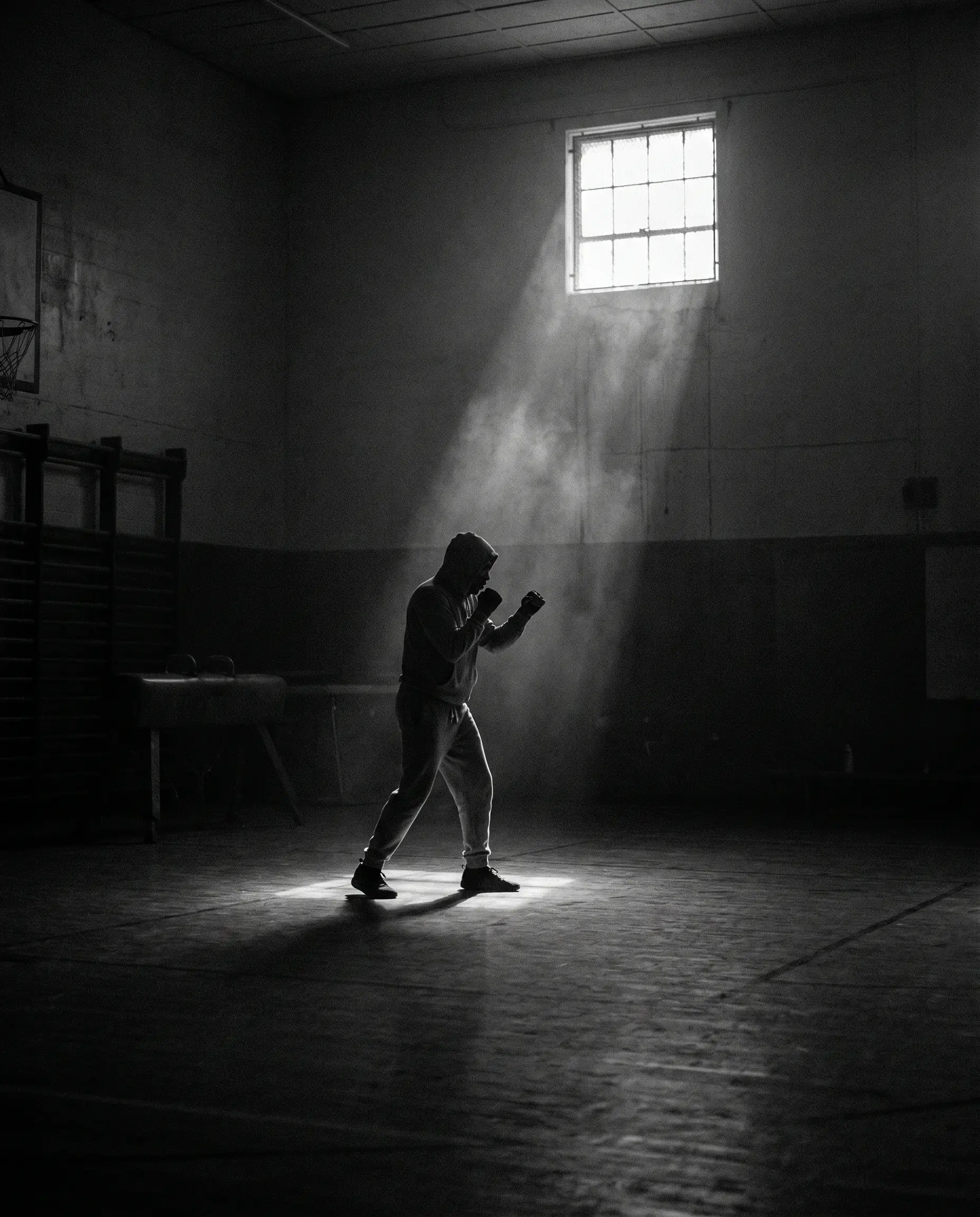
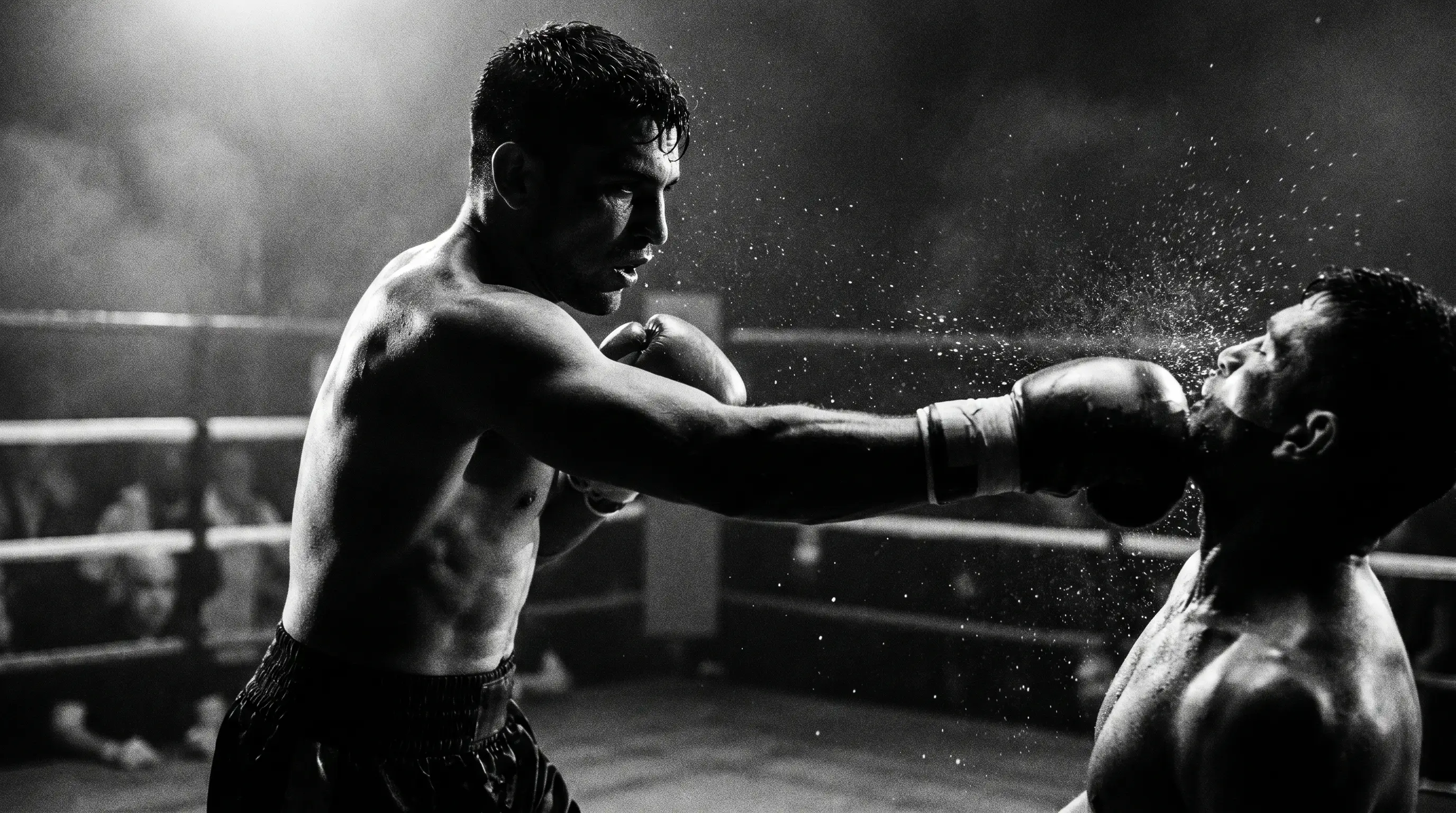
The Double Jab: Twice the Punch, Four Times the Openings
The single jab gets read. The double jab breaks rhythm, covers ground and opens doors the single never could. Why every coach eventually demands it.
The BOXING OS Desk · Jul 16, 2026 · 4 MIN READ

- ✓The double jab exists because the single gets read — the second arrives mid-counter-load.
- ✓Each jab shields a step: it's the safest way to close distance in boxing.
- ✓Rhythm is ba-bap (broken, quick), not two evenly spaced singles.
- ✓First jab measures, second commits — different jobs, one motion.
- ✓Double-jab-cross remains the sport's most reliable entry combination.
The double jab solves the single jab's core weakness: predictability. Two jabs in quick succession break the opponent's counter-timing (they load for the expected single and the second arrives mid-load), cover closing distance safely (each jab shields the step behind it), and set up the rear hand better than any single — the classic double-jab-cross being boxing's most reliable three-punch entry. Mechanics: the first jab can be lighter (a range-finder), the second steps in with full commitment; rhythm should be ba-bap, not bap...bap. It's the highest-value upgrade available to anyone whose single jab has become readable.
Your jab is good. That's the problem — good enough that opponents have started timing it. The sport's oldest answer costs one extra syllable.
Why one becomes two A single jab, repeated, becomes a metronome — and counter-punchers feast on metronomes. The double jab breaks the beat: they load their counter for the expected single, and the second jab arrives mid-load, in the transition where nobody defends well. Same punch, doubled; predictability, halved.
The hidden footwork engine Each jab shields a step. Jab-step, jab-step: you've crossed the distance that single-jab fighters need three risky entries to cover, and you arrived behind punches the whole way. Watch tall champions control entire fights doing almost nothing else.
The rhythm is the technique Ba-bap — broken and quick — not bap... bap, which is just two readable singles. Classic weighting: first jab lighter (range-finder, eye-occupier), second jab stepping in with intent. Then scramble the pattern occasionally — first one heavy instead — and the pattern itself becomes unreadable.
The doors it opens Double-jab-cross: the sport's most dependable three-punch entry, because two jabs buy the rear hand more cover than one ever could. Double jab high, hook to the body: their guard climbs with the second jab, the basement opens. Every extra jab is another half-second of them reacting instead of planning.
One jab asks a question. Two jabs interrupt the answer.
Sharpen the parent skill first: the complete jab guide.
FAQ
Why throw a double jab instead of a single?+
Rhythm disruption. Opponents time your single jab and load counters around it; the second jab arrives while they're mid-load, catching them in transition. It also covers ground — each jab shields a step forward — making it boxing's safest distance-closer.
Should both jabs be full power?+
Classically no: the first is lighter — a range-finder and eye-occupier — while the second steps in with commitment. Varying which one carries the intent (sometimes first hard, sometimes second) makes the pattern itself unreadable.
What comes after the double jab?+
The cross, most famously — double-jab-cross is the sport's most reliable entry combo, because two jabs buy more eye-occupation and better range than one. Also strong: double jab to the head, then hook to the body while they elevate their guard.
Make it personal to your fight.
Run the free Fighter Check — get your archetype, your Performance System Map and a plan built on what you just read.
Get my System Map →