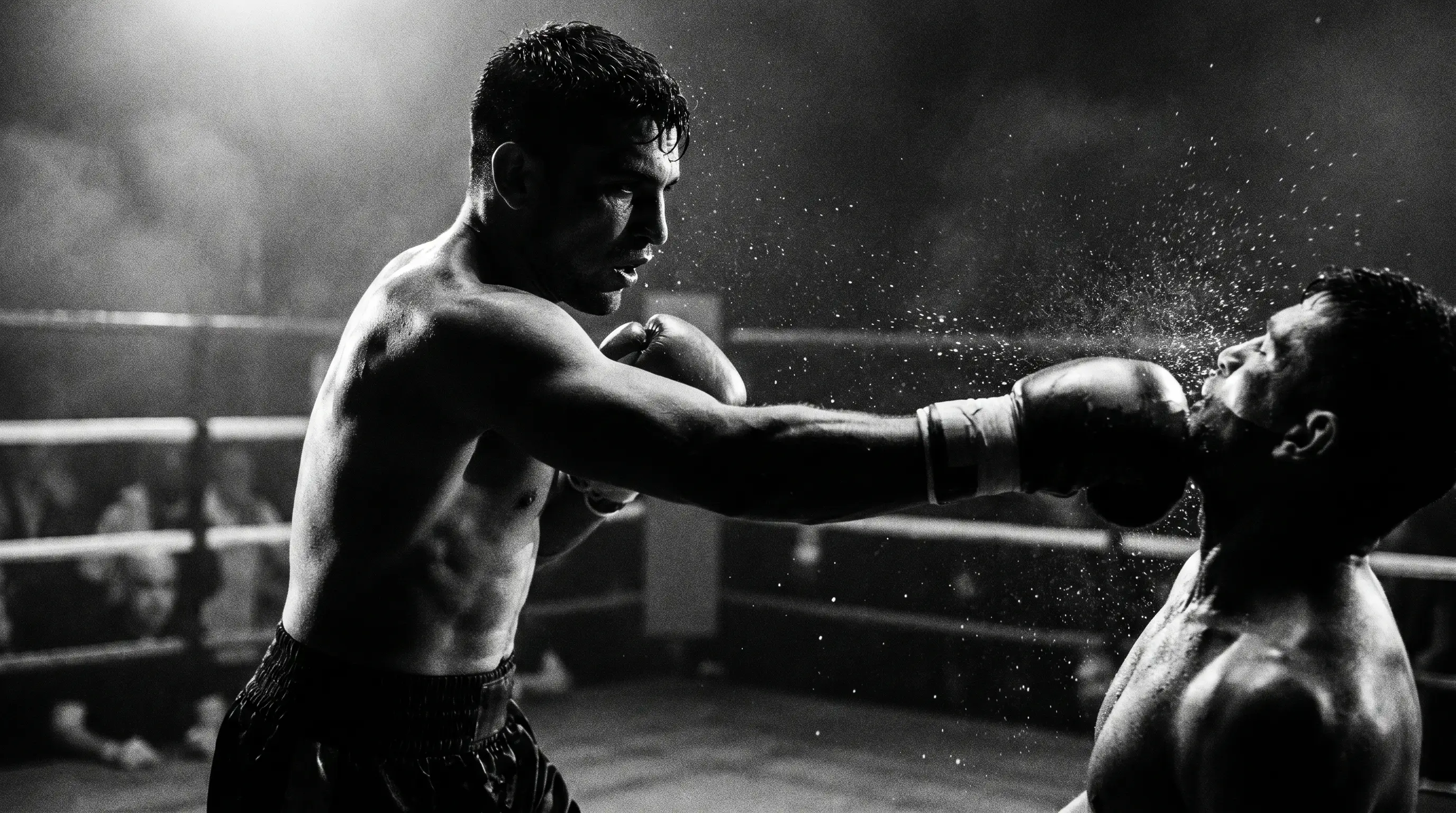
The Cross: The Straightest Path to Power
Boxing's power backbone, mechanically decoded: the kinetic chain from rear foot to fist, the three errors that leak force, and the honest drill progression.
The BOXING OS Desk · Jul 16, 2026 · 5 MIN READ
- ✓The chain: rear foot pivot → hip rotation → shoulder → fist. Break any link, lose the power.
- ✓The rear heel lifts and pivots — a planted heel means the ground never joined the punch.
- ✓Fist arrives WITH the hip, not before it. Early fist = arm punch.
- ✓The lead hand's job during the cross is guarding your chin, not dropping to your hip.
- ✓Behind the jab it's a hammer; naked at range it's a telegram.
The cross (rear straight) generates power through a kinetic chain: rear foot pivots and drives, hip rotates forward, shoulder follows, and the fist travels the shortest line to target while the lead hand guards. The three classic force leaks: no rear-foot pivot (power dies at the ground), punching before the hip arrives (arm-only impact), and dropping the lead hand as you throw (the counter-eater). It lands cleanest behind the jab, which measures distance and occupies the opponent's eyes — thrown naked at range, it's the most readable punch in boxing.
Every fighter's power backbone is the rear straight. It's also where the biggest gap between felt effort and delivered force lives — because the cross is a chain, and chains fail at their weakest link.
The chain, in order Rear foot pivots — heel lifting, ball of the foot screwing into the floor, driving force upward. Hip rotates forward, carrying the whole right side (orthodox) through. Shoulder extends the rotation and shields your chin. Fist travels the shortest possible line and arrives — critically — with the hip, not before it. Meanwhile the lead hand stays home, guarding.
The three classic leaks - The planted heel. No pivot means the ground never enters the punch. All arm, all day. - The eager fist. Launching the hand before the hip turns spends the punch before the power arrives. The sequence is felt as: foot-hip... fist. - The dropping lead hand. The counter-eater. As your right goes out, your left's only job is your chin — the great counter-punchers feast exclusively on fighters who forget this.
Where it lands Behind the jab — which measures the distance and borrows the opponent's eyes — the cross is a hammer arriving through an open door. Thrown naked from range, it's the most readable punch in the sport. The jab is not optional decoration; it's the delivery system.
The mirror test One slow-motion cross in the mirror: can you see heel, then hip, then fist as separate beats? If it's one simultaneous lunge, slow down until the sequence separates — then let speed re-fuse what practice sequenced.
Everyone owns a hammer. The chain is what decides whether it ever reaches the nail.
Pair it with the delivery system: the complete jab guide.
FAQ
Why is my cross weak even though I'm strong?+
Strength isn't the chain. If your rear heel stays planted, your hip stays square, or your fist launches before the hip turns, you're punching with arm and shoulder only — a fraction of your capacity. Film one slow rep: heel pivot, hip turn, then fist should be visibly sequential.
Cross vs straight right — what's the difference?+
Same punch, two names: the rear-hand straight punch is called a cross (it can cross over the opponent's jab) or simply the straight right (for orthodox fighters). Southpaws throw it as a straight left. The mechanics are identical.
When should I throw the cross?+
Primarily behind the jab, which measures range and occupies vision. Also as a counter over or inside an opponent's jab, and to the body against tall guards. The naked lead cross at long range is the most-telegraphed punch in boxing — save it for reads, not habits.
Make it personal to your fight.
Run the free Fighter Check — get your archetype, your Performance System Map and a plan built on what you just read.
Get my System Map →