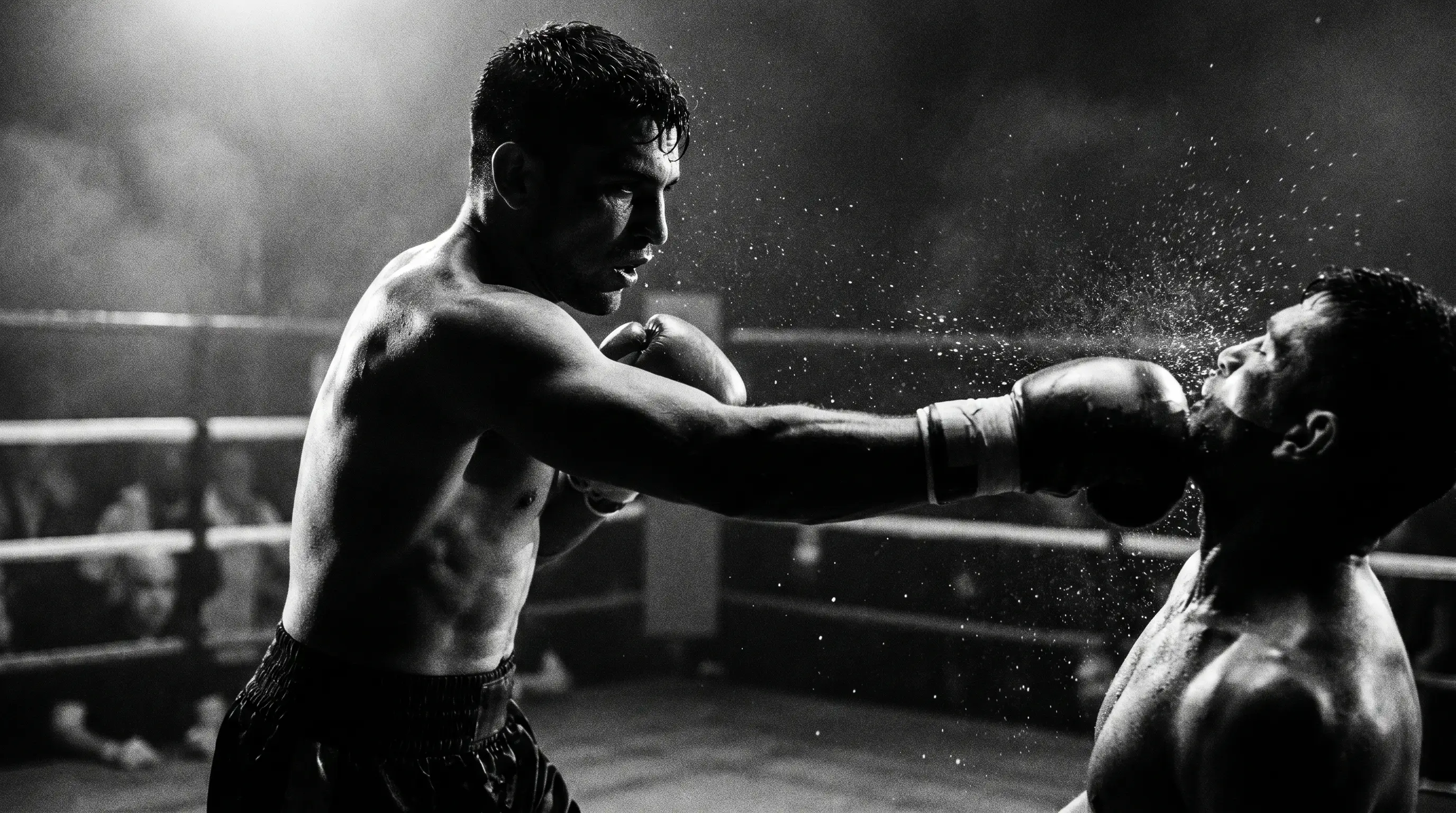
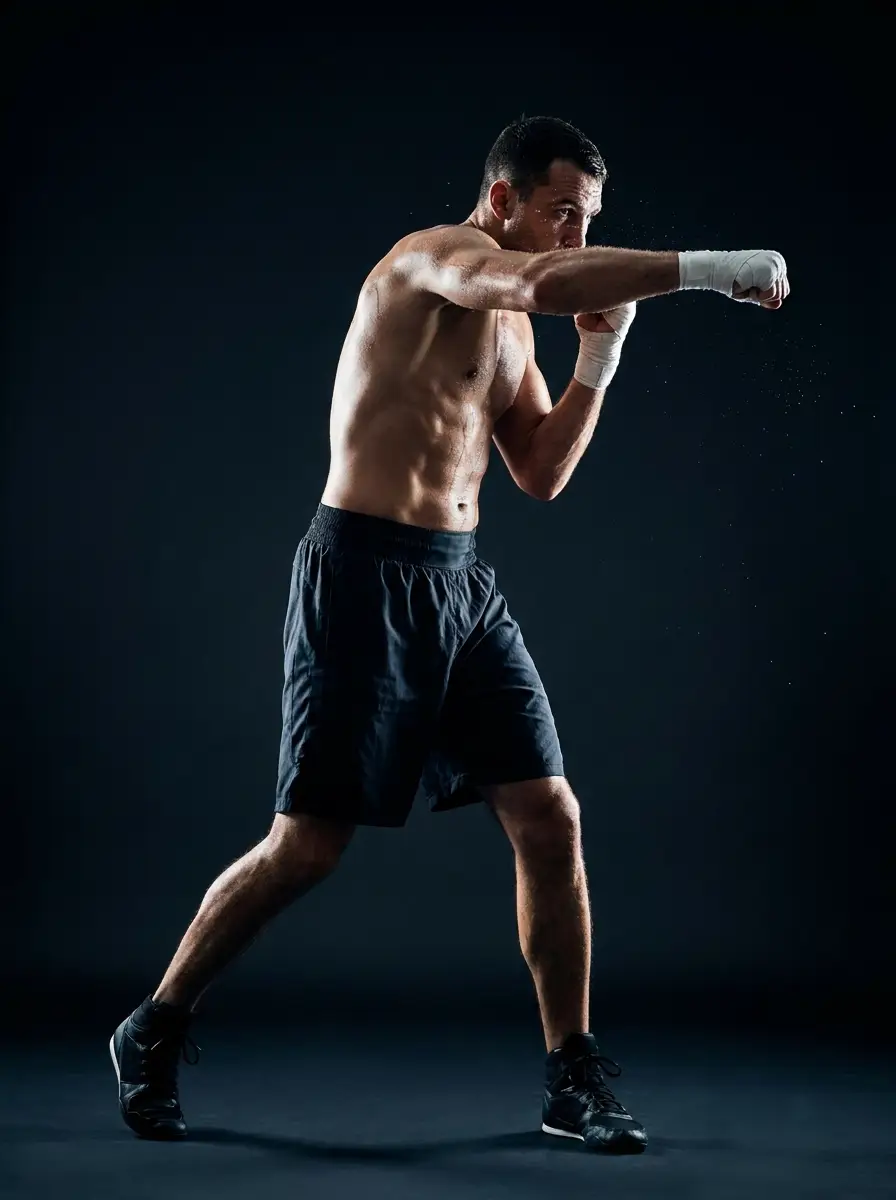
Shadow Boxing Isn't Warm-Up. It's the Whole Curriculum.
The most skipped, most shortcut, most transformative fifteen minutes in boxing — and exactly how to structure it.
The BOXING OS Desk · Jun 26, 2026 · 5 MIN READ
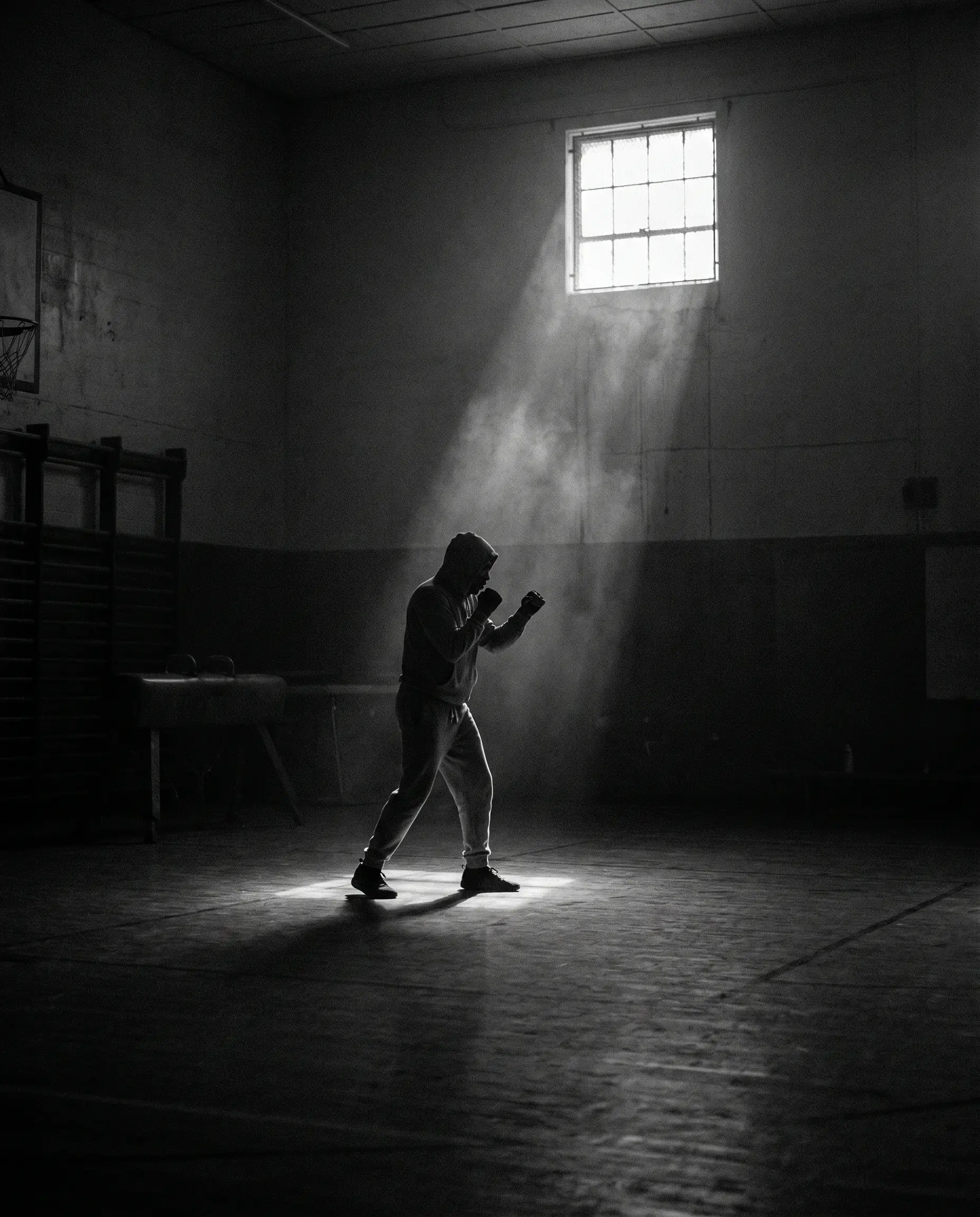
- ✓Shadow boxing with intent beats bag work without it — the bag hides errors, the shadow exposes them.
- ✓Give every round a single theme; 'just moving around' trains nothing.
- ✓Imagine a specific opponent — a pressure fighter, a jabber — and solve them.
- ✓Finish every combination with defense: slip, roll, or step. Build the habit where it's free.
- ✓Film one round a week; your eyes will coach you better than most corners.
Shadow boxing is full-intent boxing against an imagined opponent, and it's the highest-leverage training in the sport because it isolates pure technique with zero equipment. A productive 15-minute structure: round one, footwork and stance only; round two, jab and straight punches with movement; round three, full combinations with head movement after every attack; round four, fight simulation against a specific imagined style; round five, defense-first with counters. Slow enough to be perfect, fast enough to be honest.
Watch a title-fight warm-up and you'll see it: the best boxers alive, minutes from the biggest night of their lives, doing the thing beginners think is beneath them.
Why the shadow doesn't lie The heavy bag flatters you — it stands still, absorbs everything and applauds with a thud. Mitts entertain you. But the shadow shows every crossed foot, every dropped hand, every combination you finished flat-footed and admiring. No equipment means no noise. Just you and your habits.
The 15-minute curriculum Round 1 — the base. No punches. Stance, step-drag, pivots, level changes. Boring exactly the way brushing your teeth is boring.
Round 2 — straight punches. Jab and cross only, moving before and after every shot. Range honesty: extend fully, return fully.
Round 3 — full language. Combinations with a defensive move stitched to the end of each. 1-2-slip. 1-2-3-roll. Punch, then be gone.
Round 4 — the imagined opponent. Give the shadow a style. Tonight he's a pressure fighter cutting the ring; box him. Tomorrow he's a jabber on his bike; cut his ring.
Round 5 — defense first. Everything starts with a slip, a roll, or a pull, and the punches are counters only.
The shadow is honest at a price everyone can afford: attention.
Every session in the workout system opens with structured shadow rounds — the timer keeps the honesty.
FAQ
Is shadow boxing effective without equipment?+
It's not just effective — for skill-building it's the core. Technique, footwork, rhythm and fight IQ all live here. Bags and pads add power and timing on top of what shadow boxing builds.
How long should I shadow box?+
Three to five 3-minute rounds with clear themes beats twenty aimless minutes. Champions still open every session with it — it never stops being useful, it just gets deeper.
Should beginners shadow box with weights?+
No. Light-weight shadowboxing distorts punch mechanics and stresses the shoulder at speed. Build technique clean; add resistance through med-ball work instead.
Related systems
Make it personal to your fight.
Run the free Fighter Check — get your archetype, your Performance System Map and a plan built on what you just read.
Get my System Map →