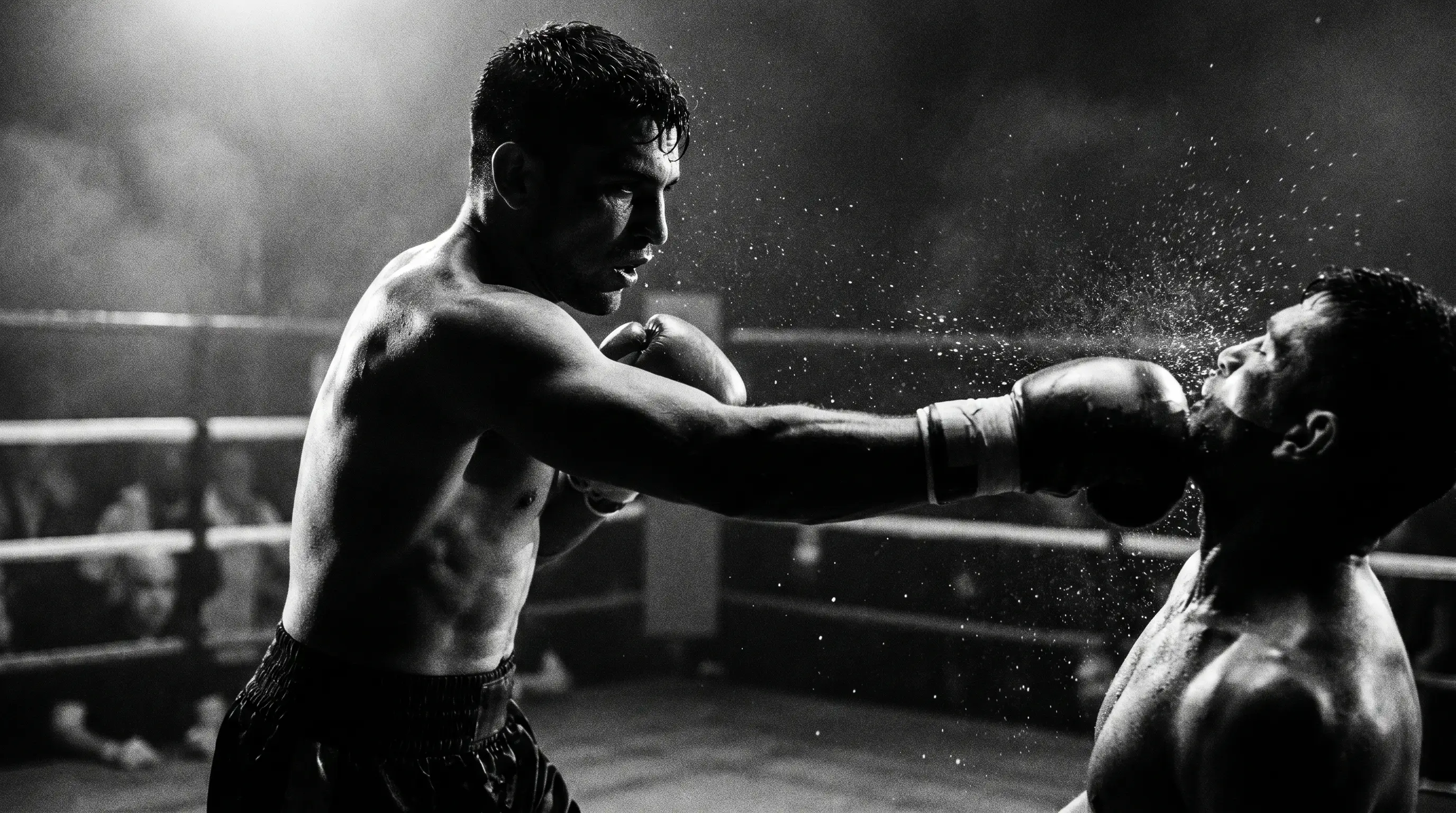
Rotational Core Power: Where Punching Force Actually Comes From
Punches aren't thrown by arms — they're thrown by the ground, through the hips, sealed by the core. The exercises that build rotation (and the anti-rotation work nobody does).
The BOXING OS Desk · Jul 17, 2026 · 5 MIN READ

- ✓The kinetic chain: ground → legs → hips → core → shoulder → fist. The core transfers, it doesn't generate.
- ✓Situps and crunches build almost nothing a punch uses. Rotation and anti-rotation do.
- ✓Med ball rotational throws are the king exercise: maximal intent, low reps, full rest.
- ✓Anti-rotation (Pallof press, single-arm carries) seals the leaks — force you generate but don't deliver.
- ✓Two 20-minute sessions a week is enough. This supplements boxing; it never replaces it.
Punching power travels from the ground up: legs drive, hips rotate, the core transfers that rotation into the shoulder and fist. The core's job in a punch is transfer, not crunching — which is why situps build almost no punching power. Train rotation explosively with medicine ball throws (rotational scoop throws against a wall, 3–4 sets of 5 per side, maximal intent, full rest) and landmine rotations. Then train anti-rotation — Pallof presses and single-arm carries — because a core that resists unwanted rotation is what lets you punch without leaking force and take angles without losing balance. Two focused sessions a week alongside boxing is plenty.
Ask a beginner where a punch comes from and they'll flex an arm. Ask anyone who's held pads for a heavyweight and they'll point at the floor.
The chain A correct punch is a wave: the foot drives into the ground, the ground pushes back, the hips rotate, the core carries that rotation up, and the fist arrives at the end of it like the tip of a whip. The arm mostly delivers force generated elsewhere. This is why strength work for boxers lives in the hips and posterior chain — and why the core's real job is transfer.
Build the rotation - Rotational scoop throws. Stand side-on to a wall, ball at the hip, rotate and throw like a hook. 4×5 per side, throw like you mean it, rest fully. Intent is the exercise. - Landmine rotations. Bar in a corner, arc it side to side with straight-ish arms. 3×8 per side, controlled down, fast up. - Med ball slam variations. For the vertical component that uppercuts live on.
Seal the leaks Generating rotation is half the job. The other half is not leaking it: - Pallof press. Cable or band at chest height, press out, resist the twist. 3×10 per side. - Single-arm farmer carry. Heavy on one side, walk tall, don't lean. 3×30 m per side.
A stiff-on-demand core is also what keeps you balanced when a big shot misses — which is a defensive skill wearing a strength costume.
Power isn't made in the arm. It's made in the ground and spent in the fist.
Fold these into fight-week-safe programming with the Boxing Vault.
FAQ
Do abs exercises increase punching power?+
Crunch-style ab work barely transfers. Punching power is rotational and comes from the ground up — train explosive rotation (med ball throws) and rotation resistance (Pallof press) instead. Visible abs and powerful punching are different projects.
How heavy should a medicine ball be for boxing?+
Light enough to throw violently — usually 2–4 kg for rotational throws. The goal is speed of rotation with maximal intent, not grinding out reps with a heavy ball.
What is anti-rotation training and why does it matter for boxing?+
Exercises where you resist being twisted — Pallof presses, single-arm carries. They build the stiffness that transfers hip rotation into the fist without energy leaking through a soft midsection, and keep you balanced when you miss.
Make it personal to your fight.
Run the free Fighter Check — get your archetype, your Performance System Map and a plan built on what you just read.
Get my System Map →