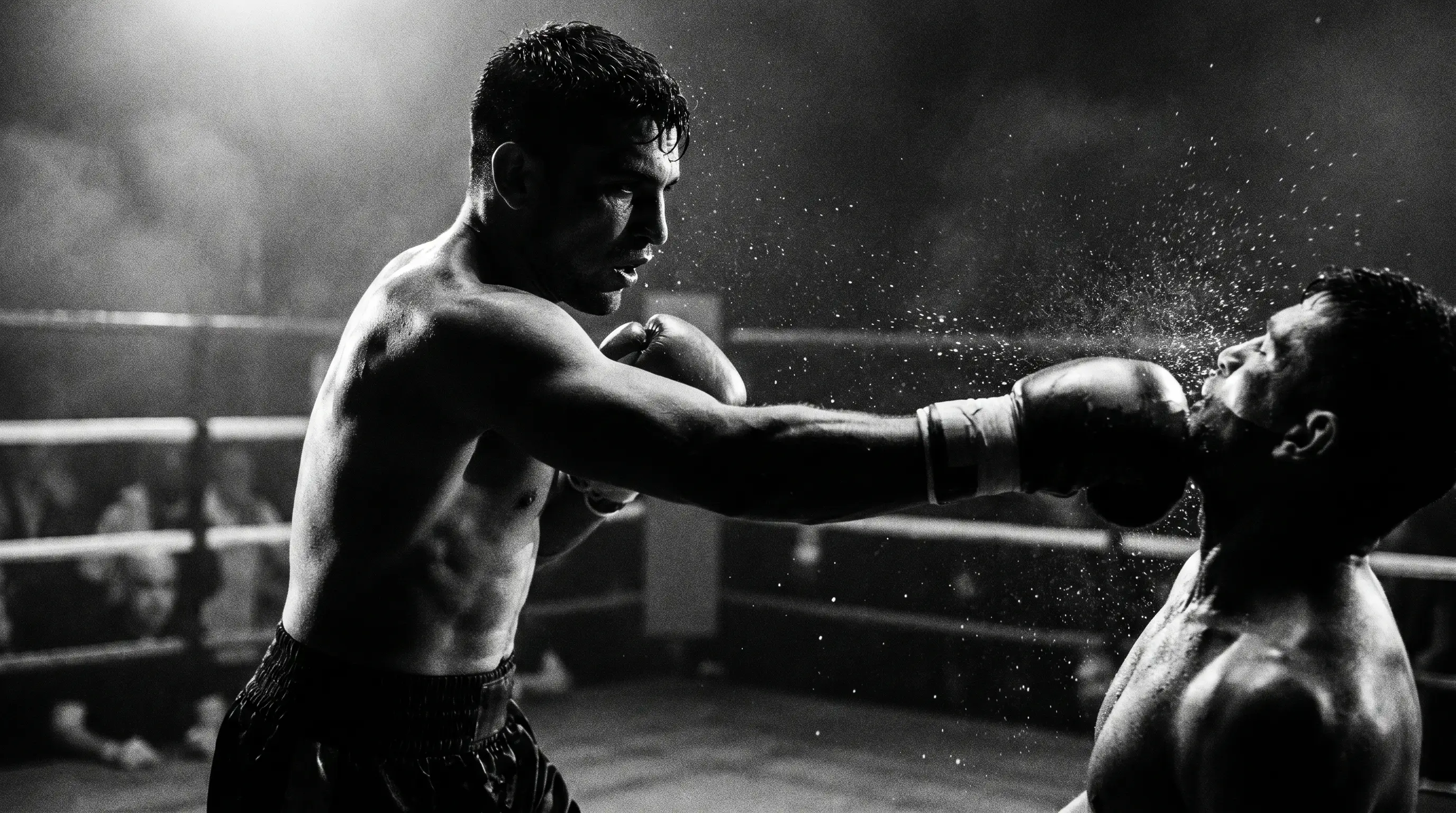
Plyometrics for Punchers: Speed You Can't Get on the Bag
Explosiveness is a skill of the nervous system — and plyometrics train it in doses the heavy bag can't. The four drills worth doing, the volume that works, and the mistakes that wreck knees.
The BOXING OS Desk · Jul 17, 2026 · 5 MIN READ

- ✓Plyometrics train the stretch-shortening cycle — the spring that turns strength into hand speed.
- ✓Four drills cover boxing: chest passes, rotational throws, pogo/rope doubles, low box jumps.
- ✓Quality is the whole game: 5–8 explosive reps, full rest, stop the set when speed drops.
- ✓Two short sessions a week, fresh — never as a finisher, never tired.
- ✓Land like a cat. High-rep tired jumping is joint abuse wearing a training mask.
Plyometrics train the stretch-shortening cycle — the spring-like quality that turns strength into speed — which is exactly what fast, hard punching runs on. Four drills cover a boxer's needs: explosive med ball chest passes (hand speed), rotational throws (hook power), pogo jumps or jump rope doubles (ankle stiffness for footwork), and low box jumps (hip drive). The rules that matter: quality over quantity (5–8 reps per set, stop when speed drops), full rest between sets, two sessions a week, landings as soft as the takeoffs are violent. Plyometrics fail when treated as conditioning — high-rep tired jumping builds nothing and grinds joints.
Strength is how much force you can produce. Power is how fast you can produce it. A boxer with a big squat and slow hips has bought the engine and left it in the crate.
Why throws beat everything Almost every gym lift ends with deceleration — you slow the bar down at the top or you'd throw it. A medicine ball throw is the exception: you accelerate through release, exactly like a punch. That makes throws the closest strength-room cousin to punching, and the first plyometric a boxer should own. (It's also the honest version of what shadowboxing with weights pretends to be.)
The four - Explosive chest pass. Half-kneeling or standing, put the ball through the wall. 4×5. - Rotational scoop throw. The hook, weaponized. 3×5 per side. - Pogo jumps / rope doubles. Stiff ankles, fast ground contact — the spring your footwork bounces on. 3×15 seconds. - Low box jump. Knee-height box, violent up, step down, reset. 3×5. The box is for landing softly, not for Instagram height.
The rules that keep you healthy - Fresh, never fried. Plyos are nervous-system training. Do them early in a session, two days a week. - Stop when speed drops. The rep that grinds is the rep that stopped training explosiveness. - Land silently. If the landing is loud, the volume is wrong or the box is too high.
Conditioning makes you tired on purpose. Plyometrics must never be either.
Program them alongside your rounds in the Boxing Vault — power work slots on strength days.
FAQ
Do plyometrics make you punch faster?+
They train the explosive qualities — rate of force development and the stretch-shortening cycle — that fast punching depends on. Combined with technique work, that's the recipe. Neither alone is enough.
How many plyometric sessions per week for a boxer?+
Two, kept short (15–20 minutes) and done fresh — ideally before skill work or on strength days. The nervous system adapts to quality, and quality dies with fatigue.
Are box jumps or med ball throws better for boxing?+
Med ball throws transfer more directly — punching is an upper-body ballistic action, and throws are the only gym exercise where you accelerate through release like a punch. Box jumps support the hip drive underneath. Do both, throws first in priority.
Make it personal to your fight.
Run the free Fighter Check — get your archetype, your Performance System Map and a plan built on what you just read.
Get my System Map →