The Kick That Ended It: What Went Wrong With McGregor's Jumping Scissor Kick
A single low-percentage strike ended UFC 329's main event in the opening seconds. The mechanics of why jumping kicks are the riskiest tool in a striker's kit.
The BOXING OS Desk · Jul 12, 2026 · 5 MIN READ
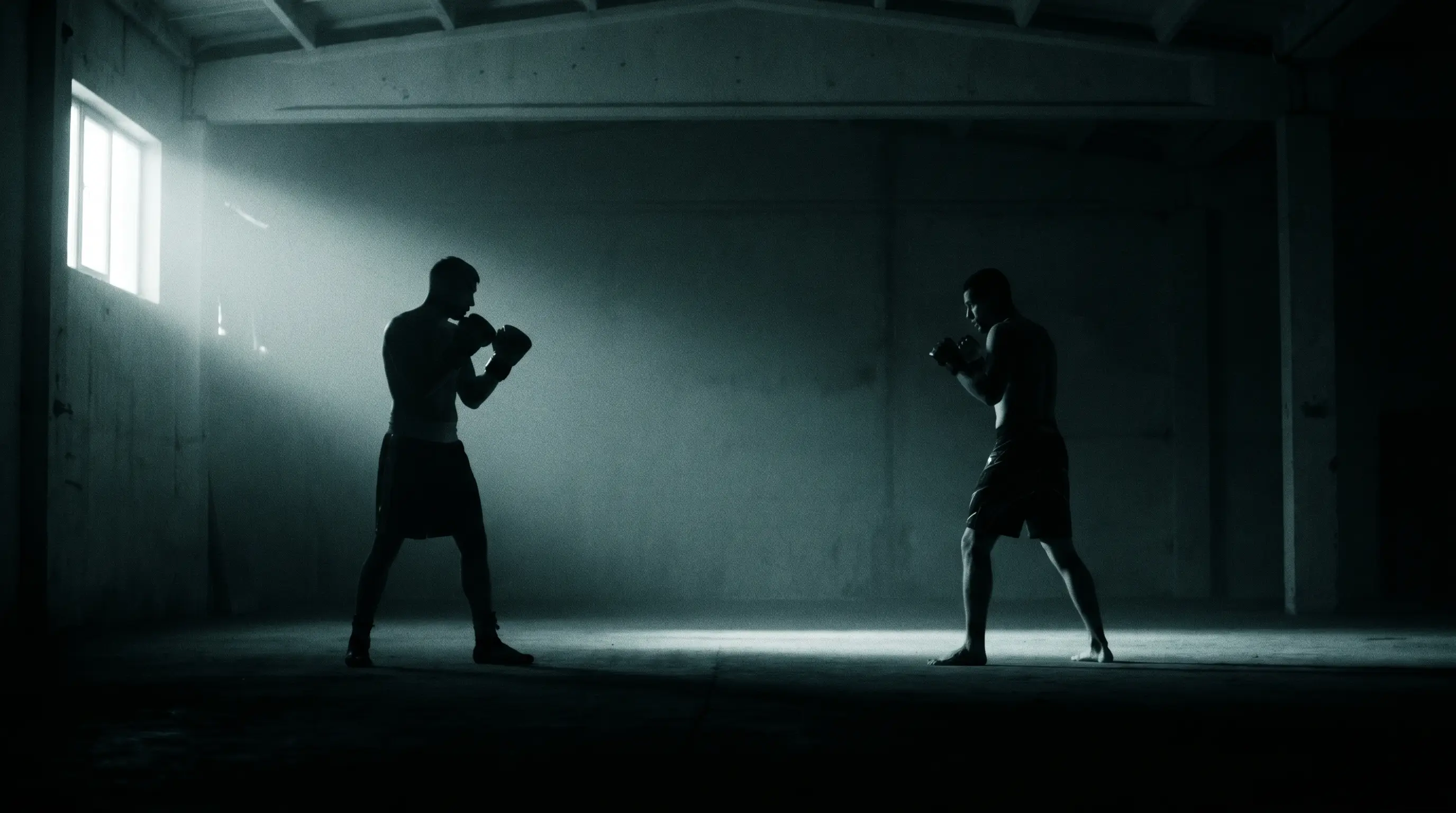
- ✓Jumping and spinning kicks require full commitment of body weight to a single landing point — there's no base to recover from a bad angle.
- ✓The risk is almost entirely borne by the thrower: even a partially blocked or missed jumping kick can injure the standing leg on landing.
- ✓Elite fighters use these strikes sparingly and usually against a scouted, retreating opponent — not in the opening seconds of a live firefight.
- ✓The reward (highlight-reel finishes) explains why fighters keep throwing them despite the cost.
- ✓The lesson for any combat athlete: novelty strikes need a specific tactical window, not just an opening.
Jumping and spinning kicks carry the highest self-injury risk of any strike in combat sports because they require the thrower to fully commit body weight to a single, often awkward landing — with no base to absorb a bad angle. At UFC 329, McGregor's jumping scissor kick attempt in the opening seconds against Max Holloway appeared to injure his knee on landing, ending the fight by TKO before a real exchange occurred. The strike is high-reward when it lands clean and disproportionately risky when it doesn't — a trade-off most fighters, including elite ones, occasionally misjudge.
Combat sports have a category of strike that lives entirely on the highlight reel: jumping kicks, spinning attacks, flying knees. They end fights spectacularly when they land. What UFC 329 showed the world is what happens on the other side of that coin.
The physics of commitment A jab can be pulled back mid-flight. A jumping kick cannot. Once a fighter leaves the ground, their entire body weight is committed to one trajectory and one landing — no ability to adjust for a bad angle, an opponent's small step, or simple bad luck on the canvas. McGregor's jumping scissor kick attempt in the opening seconds of his UFC 329 main event against Holloway appeared to buckle his knee on landing. Not from a counter. Not from contact. From the mechanics of the strike itself.
Why fighters throw it anyway Because when it lands, nothing else in the sport looks like it. A flush jumping kick is a career highlight, a viral clip, a statement. That asymmetry — modest chance of a spectacular win against real risk of a self-inflicted injury — is exactly the kind of bet elite fighters occasionally get wrong, even at the highest level of the sport.
The tactical window that matters The strikers who use these tools well don't throw them into live, unread exchanges. They wait for a scouted pattern — an opponent who circles predictably, drops a hand on the exit, or telegraphs a retreat — and time the low-percentage strike to a moment where the odds have shifted in their favor. Throwing it cold, in the opening seconds against an unscouted live opponent, maximizes the downside without buying much of the upside.
The kick that wins you a highlight reel and the kick that ends your night off the clock are often the exact same kick, thrown at the wrong second.
Boxing's equivalent lesson lives in counter-punching — the leaping hook, the lunging uppercut — teaches the same discipline with a jab and a right hand instead of a leg.
FAQ
Why are jumping kicks so risky in MMA?+
They commit the fighter's full body weight to a single airborne trajectory with no ability to adjust mid-strike. If the landing angle is even slightly off, the strain lands on the knee, ankle or hip with no way to brace — unlike a punch, which can be pulled or redirected.
Do elite strikers avoid jumping kicks?+
Not entirely, but they use them selectively — usually against an opponent who's retreating predictably, not in the opening exchanges of a live fight where footing and range aren't yet established.
Is this kind of injury common in combat sports?+
Non-contact injuries from low-percentage strikes happen across striking sports, though they're relatively rare at the elite level precisely because top fighters ration when they throw them.
Related fighters
Make it personal to your fight.
Run the free Fighter Check — get your archetype, your Performance System Map and a plan built on what you just read.
Get my System Map →