Boxing vs MMA Striking: Same Fists, Different Physics
Why elite boxers get kicked apart in cages and elite MMA strikers get boxed up in rings — the stance, the distance, and the threat count.
The BOXING OS Desk · Jul 2, 2026 · 6 MIN READ
- ✓Threat count drives everything: two weapons vs a dozen changes stance, defense and rhythm.
- ✓Bladed boxing stances eat leg kicks; square MMA stances lose boxing exchanges.
- ✓MMA heads stay high — the low slip that wins in boxing meets a knee in the cage.
- ✓Boxing combinations run 4–6 punches; MMA's run 2–3 before takedown risk cancels the rest.
- ✓Boxing hands transfer to MMA brilliantly — but only rebuilt on an MMA base.
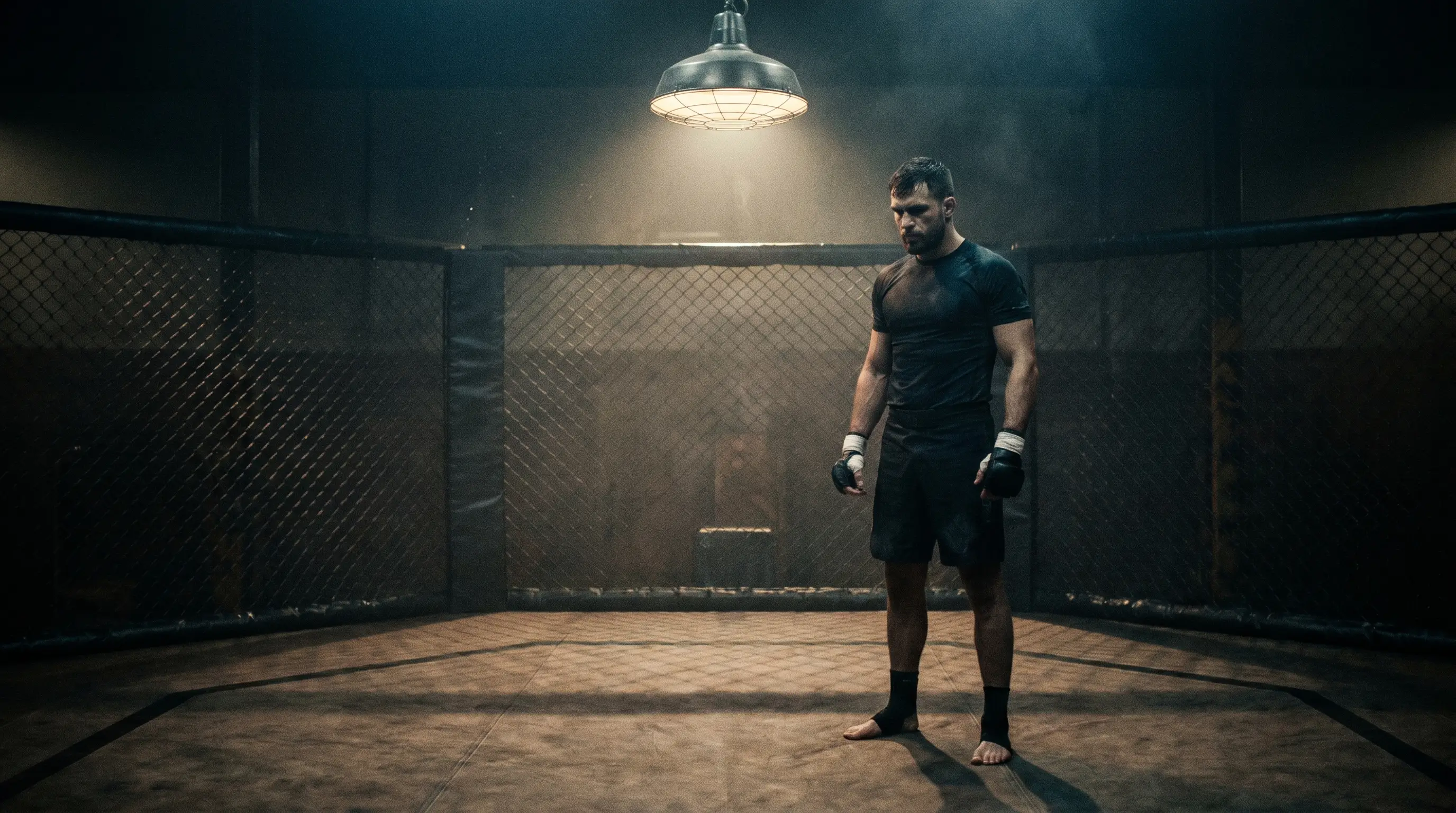
Boxing and MMA striking diverge from one variable: the threat count. Boxing defends two fists, so stances can be bladed, heads can slip low, and combinations can run long. MMA defends fists, kicks, knees, elbows and takedowns — so stances square up, weight stays over the hips for sprawls, heads stay higher (ducking meets knees), and combinations stay short because every extended exchange invites a level change. Boxing's craft is deeper per weapon; MMA's is wider across weapons. Each looks foolish playing the other's rules.
Put the best pure boxer alive in a cage unedited and the ending writes itself: a chopped lead leg or a double-leg inside ninety seconds. Put an elite MMA striker in a ring under boxing rules and watch him lose every exchange to a man who's thrown a million more punches. Neither is the better fighter. They're natives of different physics.
One variable, everything downstream Boxing is a defensive problem with two inputs — left fist, right fist. Everything elegant about the sport grows from that constraint: the deep bladed stance (maximum reach and leverage), the low slips and rolls (safe when nothing can knee you), the six-punch combinations (safe when nobody can shoot underneath them).
MMA multiplies the inputs — kicks high and low, knees, elbows, and above all the takedown, which converts any standing mistake into a different sport happening on the floor. Every multiplication subtracts a boxing luxury:
- —The stance squares and shortens: hips must face forward, ready to sprawl; the lead leg can't live out front as a kick target.
- —The head stays tall: the beautiful waist-low slip is a knee's dinner invitation.
- —Combinations compress: two, three strikes, out — the fourth punch is when the level change comes.
What transfers, what doesn't Boxing's gifts to the cage are real: hand speed, punch mechanics, distance IQ, short head movement. But they ride on a rebuilt chassis. The best boxing in MMA is unmistakably boxing — and unmistakably not a boxer's boxing.
The cage doesn't refute boxing. It just charges rent boxing never budgeted for.
The MMA-base sessions train boxing hands on an MMA chassis — squarer, taller, shorter bursts.
FAQ
Would a boxer beat an MMA fighter?+
Under boxing rules, almost always the boxer; in a cage, almost always the MMA fighter — one leg kick or takedown breaks the boxer's entire defensive system. The honest answer is that ring and cage are different sports whose skills only partially overlap.
Why do MMA fighters stand so square?+
Takedowns and leg kicks. A bladed boxing stance offers the lead leg as a target and one-leg balance to wrestlers. Squaring up costs punching leverage but keeps both hips ready to sprawl and both legs harder to chop.
Does boxing help in MMA?+
Enormously — hands, distance feel and head movement are permanent advantages. But they must be rebuilt on an MMA chassis: higher head, squarer stance, shorter combinations. Boxers who transplant their style unedited get leg-kicked and taken down.
Related systems
Make it personal to your fight.
Run the free Fighter Check — get your archetype, your Performance System Map and a plan built on what you just read.
Get my System Map →