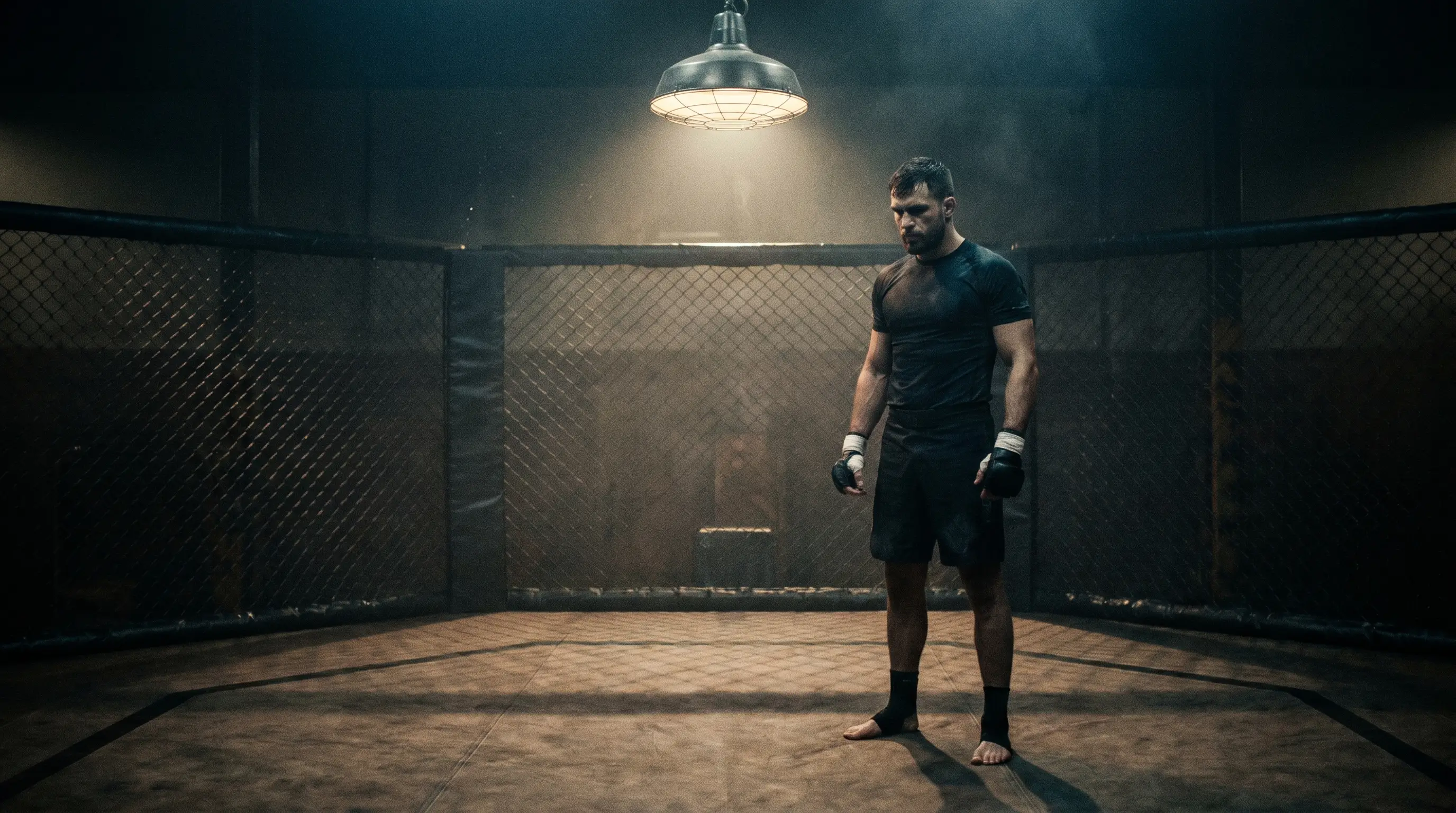
Kickboxing for Beginners: The First Eight Weeks, Mapped
Stance, the first four weapons, the conditioning wall everyone hits — an honest map of your first two months in the art.
The BOXING OS Desk · Jun 29, 2026 · 5 MIN READ

- ✓Weeks 1–2 are feet and guard — boring exactly in proportion to how much they matter.
- ✓The roundhouse is a hip technique wearing a leg costume: turn the standing foot, swing the hip.
- ✓The teep is your jab for legs — range control, posture breaks, free points.
- ✓Kick conditioning is its own economy: shins and hips adapt on their schedule, not yours.
- ✓Three sessions a week for eight weeks beats six sessions for three — consistency is the technique.
A beginner's first eight weeks of kickboxing follow a reliable arc: weeks 1–2 are stance, guard and footwork (plus the humbling discovery of fight-specific conditioning); weeks 3–4 add the four core weapons — jab, cross, roundhouse kick and teep — with the roundhouse's hip rotation as the first real technical wall; weeks 5–6 combine hands and kicks into basic sequences; weeks 7–8 introduce light partner drills and defensive fundamentals (checks, blocks, distance). Three sessions weekly is the sweet spot; soreness is universal; visible coordination arrives around week six.
Every kickboxing gym sees the same movie: the newcomer who arrives fit from the weight room and discovers, ninety seconds into pad work, that fighting fitness is a different currency his bank doesn't stock. That discovery is week one. Here's the rest of the map.
Weeks 1–2 — the platform Stance (feet staggered, hips half-turned, hands home), the step-drag, and the guard that doesn't collapse when you move. It feels like nothing is happening. Everything is happening — every weapon you'll ever throw stands on this fortnight.
Weeks 3–4 — the first four weapons The jab and cross arrive from boxing's syllabus. Then the two that make it kickboxing: the roundhouse, which every beginner throws as a leg swing until the day the hip rotation clicks and the pad holder suddenly checks his forearm — and the teep, the front push-kick that works like a jab for your legs, managing range and stealing posture.
The roundhouse hip is the first true wall. The key nobody believes at first: turn the standing foot. The kick is a rotation the leg merely rides.
Weeks 5–6 — sentences Hands and legs stop being separate vocabularies: jab-cross-roundhouse. Teep to enter, cross behind it. Coordination that felt impossible in week two starts appearing uninvited.
Weeks 7–8 — the conversation Light partner drills: checks against kicks, blocks, distance games. The art reveals itself as dialogue, and the addiction usually dates from here.
Eight weeks in, you won't be dangerous. You'll be a student — which is the dangerous thing to become.
The beginner striking path sequences these eight weeks session by session.
FAQ
Is kickboxing hard to learn?+
The basics arrive fast — most beginners throw recognizable combinations within a month. The depth is bottomless, and the first honest obstacle isn't technique but conditioning: three-minute rounds use the body in ways gym fitness doesn't cover. Expect humility, then rapid progress.
Can I start kickboxing with no fitness base?+
Yes — classes scale, and the sport builds its own conditioning faster than any pre-training would. Starting unfit just means your first two weeks are harder and your progress curve steeper. Turning up is the entire entry requirement.
How often should a beginner train kickboxing?+
Three sessions weekly is the classic sweet spot: enough frequency for skills to stick, enough recovery for an unadapted body. Two works with slower progress; five in week one usually ends in injury or burnout by week three.
Make it personal to your fight.
Run the free Fighter Check — get your archetype, your Performance System Map and a plan built on what you just read.
Get my System Map →