The 30-second version
- ✓Months 1-3 essentials: wraps (×2), 12-16oz gloves, mouthguard when contact starts, flat shoes you own.
- ✓Cheap is fine: wraps, skipping rope, clothing. Cheap is a mistake: gloves and mouthguards.
- ✓Boxing shoes, own headgear and a home bag are commitment rewards, not entry tickets.
- ✓Two pairs of wraps means one is always dry — your training partners' noses thank you.
- ✓Total honest starter spend is modest — boxing remains one of sport's cheapest entries.
● The short answer
The essential first boxing kit is short: hand wraps (buy two pairs, wash them), 12-16oz training gloves depending on your size and use, a mouthguard once contact starts, and any flat-soled shoes you own. That's genuinely everything for months one to three. What waits: boxing shoes (until regular sparring), your own headgear (gyms lend), heavy bag (until commitment is proven), and skipping rope (cheap — grab one early, actually). Where cheap is fine: wraps, rope, shorts. Where cheap is a mistake: gloves that break down in weeks, and any mouthguard that fits badly.
Boxing's dirty secret, in the best way: it's one of the cheapest sports on earth to start. Here's the complete honest list — and the traps.
The essentials (months 1–3)
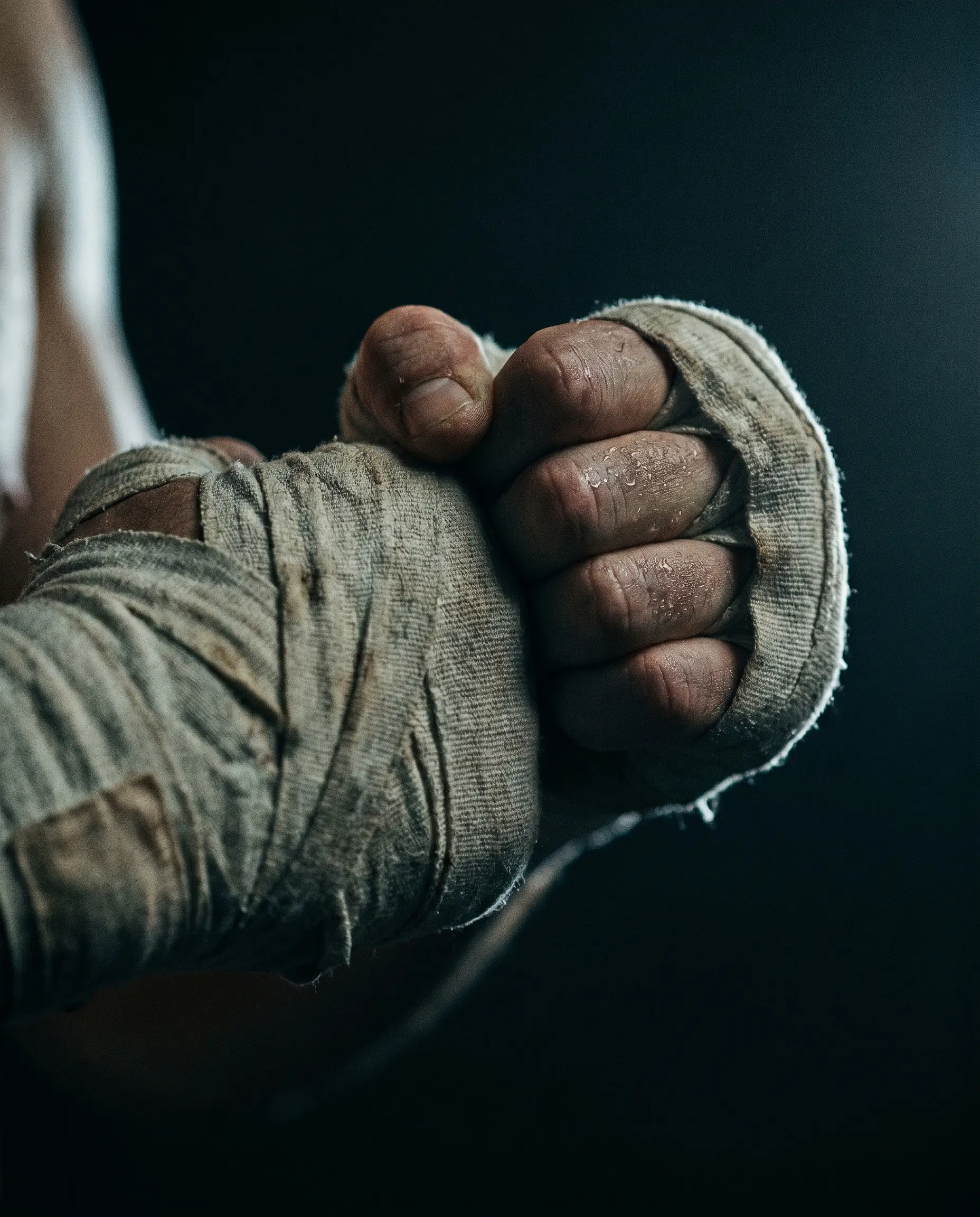
- —Hand wraps × 2 pairs. Cheap, washable, essential from day one. Two pairs so one is always dry. Wrapping guide here.
- —Training gloves, 12–16oz. The one early purchase worth quality — see the trap below. Full sizing guide.
- —Mouthguard — the moment any contact drills begin. What matters.
- —Flat-soled shoes you already own. Not running shoes. Anything flat.
- —A skipping rope — technically optional, but it costs almost nothing and you'll want it.
What waits (and why that's good)
Boxing shoes — when sparring is regular. Your own headgear — gyms lend loaners while you decide if you're serious. A home heavy bag — after ninety days of showing up, as a reward. Delaying these isn't deprivation; it's proof-of-commitment budgeting.
Where cheap fails
Two places. Gloves: bargain pairs collapse at the wrist and padding within weeks — the injury risk lands in your hands. Mouthguards: fit is protection; a loose guard is decoration. Everywhere else — wraps, rope, shorts, shirts — spend nothing and lose nothing.
● The fight week, in your inbox
Results, the fights that matter next, and the science behind them.
The most expensive equipment in boxing is the membership you don't use. Everything else is rounding error.
Kit sorted for less than a night out. Now the plan that uses it.
FAQ
What equipment do I need to start boxing?+
Hand wraps, one pair of 12-16oz training gloves, and a mouthguard once any contact work starts — plus flat-soled shoes you already own. Gyms provide bags, ropes and usually loaner headgear. The barrier to entry is genuinely this low.
What size gloves should a beginner buy?+
Covered in depth in our glove guide — the short version: 14-16oz for most adults doing bagwork and partner drills, with the heavier end doubling as sparring-appropriate at most gyms. Bigger people and sparring use = heavier gloves.
Where should I not save money on boxing gear?+
Gloves and mouthguards. Bargain gloves break down at the wrist and padding within weeks and can let you hurt your hands; a badly fitting mouthguard protects nothing. Everything else — wraps, ropes, clothing — cheap works fine.
BoxingFinesse · Partner
The Vault: rare, by invitation.
Rare and vintage fight pieces, private auctions, limited drops and collections made with pro fighters. The key is free — members see everything first.
- Rare pieces
- Auctions
- Drops & merch
- Fighter collabs
- Tickets & events
- Tools & programs
800+ in the Finesse Club · 500+ vintage magazines