The Check Hook: The Pressure-Fighter's Kryptonite
One punch neutralizes the guy who keeps walking through everything. The check hook's mechanics, its famous knockouts, and the pivot that makes it work.
The BOXING OS Desk · Jul 16, 2026 · 4 MIN READ
- ✓One motion, two results: the hook lands while the pivot removes you from the charge line.
- ✓The opponent's forward momentum is half the punch's power — they walk into it.
- ✓Timing key: throw as their weight commits forward, not before, not after.
- ✓It's the classic rope-escape: punch, pivot, and suddenly you're in center ring facing them.
- ✓Practice the pivot alone first — the punch is easy; the exit is the skill.
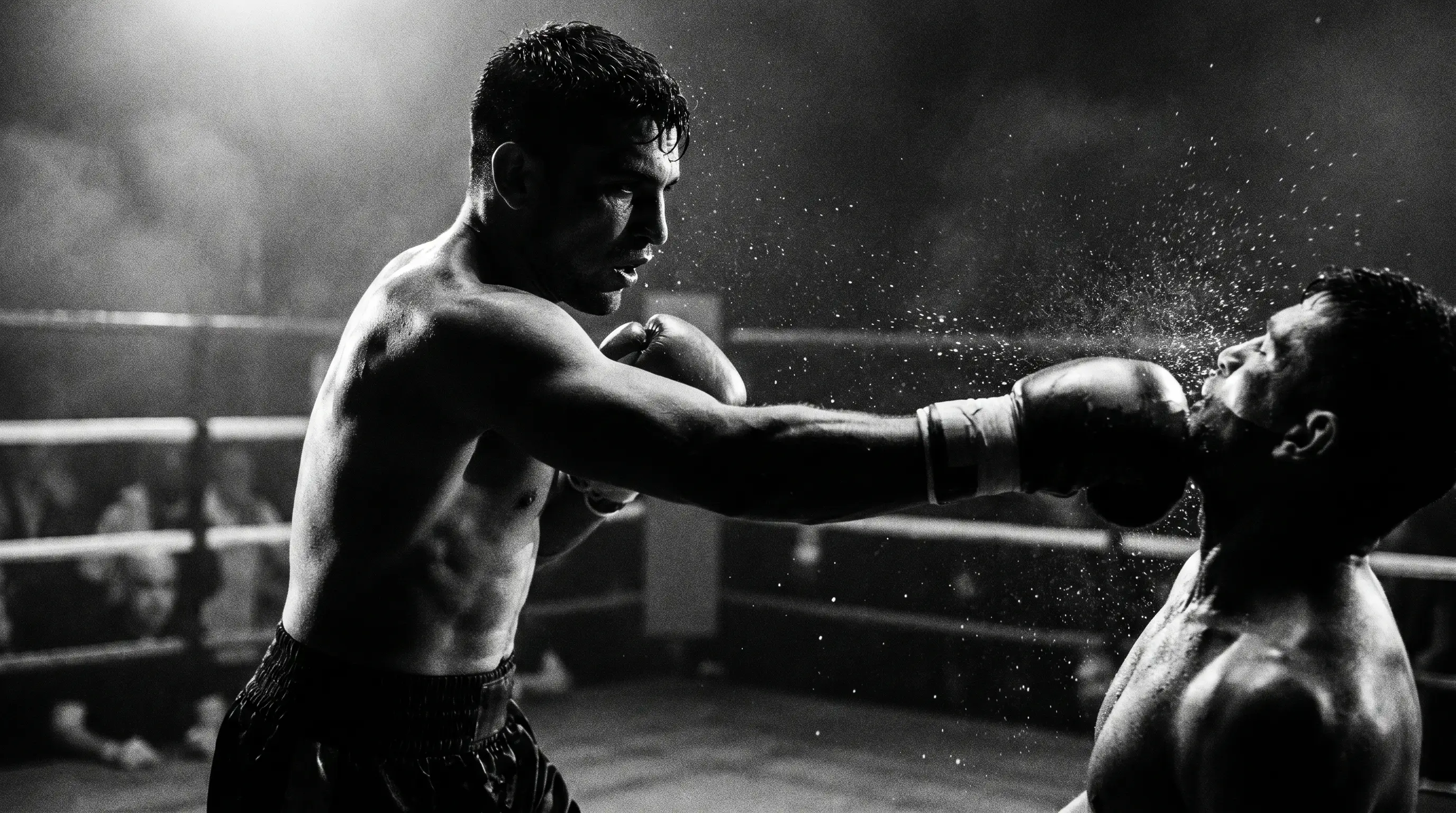
The check hook is a lead hook thrown while pivoting away on the lead foot — offense and escape in a single motion, designed specifically against pressure fighters who charge forward. Mechanics: as the opponent steps in, throw the lead hook while simultaneously pivoting your rear leg away (like a matador's turn), so the punch meets their incoming momentum while your body leaves the collision point. Their forward energy doubles the impact; your pivot removes the target. It's the classic answer to being backed toward the ropes, and boxing history's highlight reels feature it against overcommitted chargers.
Every gym has one: the pressure guy who walks through jabs, eats crosses, and keeps coming. Boxing evolved a specific answer, and it's a thing of beauty.
One beat, two jobs The check hook is a lead hook and an escape thrown as a single motion: as the pressure fighter steps in, your lead hook fires while your rear leg pivots away behind you — the matador's turn with a punch attached. Done right, two things happen at once: their forward momentum walks their chin into your hook (their energy becomes your power), and your body leaves the spot they were charging toward.
The timing window Throw it as their weight commits — the moment the step lands and can't be recalled. Too early and they read it; too late and you're sharing a phone booth with them. The tell to watch: the head coming forward past the lead knee.
Why it owns the ropes Getting backed up is the pressure fighter's whole plan. The check hook inverts it: punch, pivot, and suddenly you're in center ring watching their back. The sport's highlight reels are full of exactly this reversal — overcommitted chargers meeting a hook they supplied the power for.
Train the exit first Everyone drills the hook; the skill is the pivot. Practice matador turns alone — lead foot as the post, rear leg sweeping 90-180° behind — until smooth. Then weld the hook on. If it's two beats, keep drilling; the weapon works at one.
Pressure beats fighters who retreat in straight lines. The check hook makes the straight line disappear.
Against the chargers in your gym: the counter-punching guide completes the toolkit.
FAQ
What is a check hook in boxing?+
A lead hook thrown simultaneously with a pivot away on the lead foot — you strike the incoming opponent while turning off their line of attack, like a matador with a punch. It's boxing's premier anti-pressure weapon.
When do you throw a check hook?+
The instant a pressure fighter commits their weight forward stepping in — especially when you're being backed toward the ropes. Their momentum amplifies the punch while your pivot takes you off the collision line and often leaves you in center ring behind them.
Why does my check hook feel awkward?+
Because the pivot is the hard part, and most people practice the punch instead. Drill the matador pivot alone — lead foot planted, rear leg swinging 90-180° behind you — until it's smooth, then add the hook. Punch plus pivot must be one beat, not two.
Make it personal to your fight.
Run the free Fighter Check — get your archetype, your Performance System Map and a plan built on what you just read.
Get my System Map →