Do You Need Boxing Shoes? An Honest Answer
The honest gear question nobody answers straight: when boxing shoes actually matter, what they change, and when your trainers are perfectly fine.
The BOXING OS Desk · Jul 16, 2026 · 4 MIN READ

- ✓Beginners: flat-soled trainers are genuinely fine. Don't let gear gatekeep your start.
- ✓Boxing shoes matter when sparring starts: pivot-friendly grip, floor feel, ankle support.
- ✓Running shoes are the actual problem — thick soft soles wreck balance and catch on pivots.
- ✓Thin soles = floor feel = better balance and force transfer. That's the core benefit.
- ✓Buy boxing shoes as a commitment reward, not an entry ticket.
Beginners don't need boxing shoes — clean, flat-soled trainers are fine for your first months of bagwork and drills. Boxing shoes start to matter when you spar and compete: their thin, grippy, pivot-friendly soles and ankle support change how you feel the floor, pivot without catching, and push off. The real differences are grip pattern (built for pivoting, not running), thin soles (floor feel), high tops (ankle support in lateral movement) and weight (very light). Buy them when the sport becomes yours — not before your first class.
Walk into any boxing forum and ask about shoes, and you'll get gear-obsessed answers within minutes. Here's the answer a good coach gives instead.
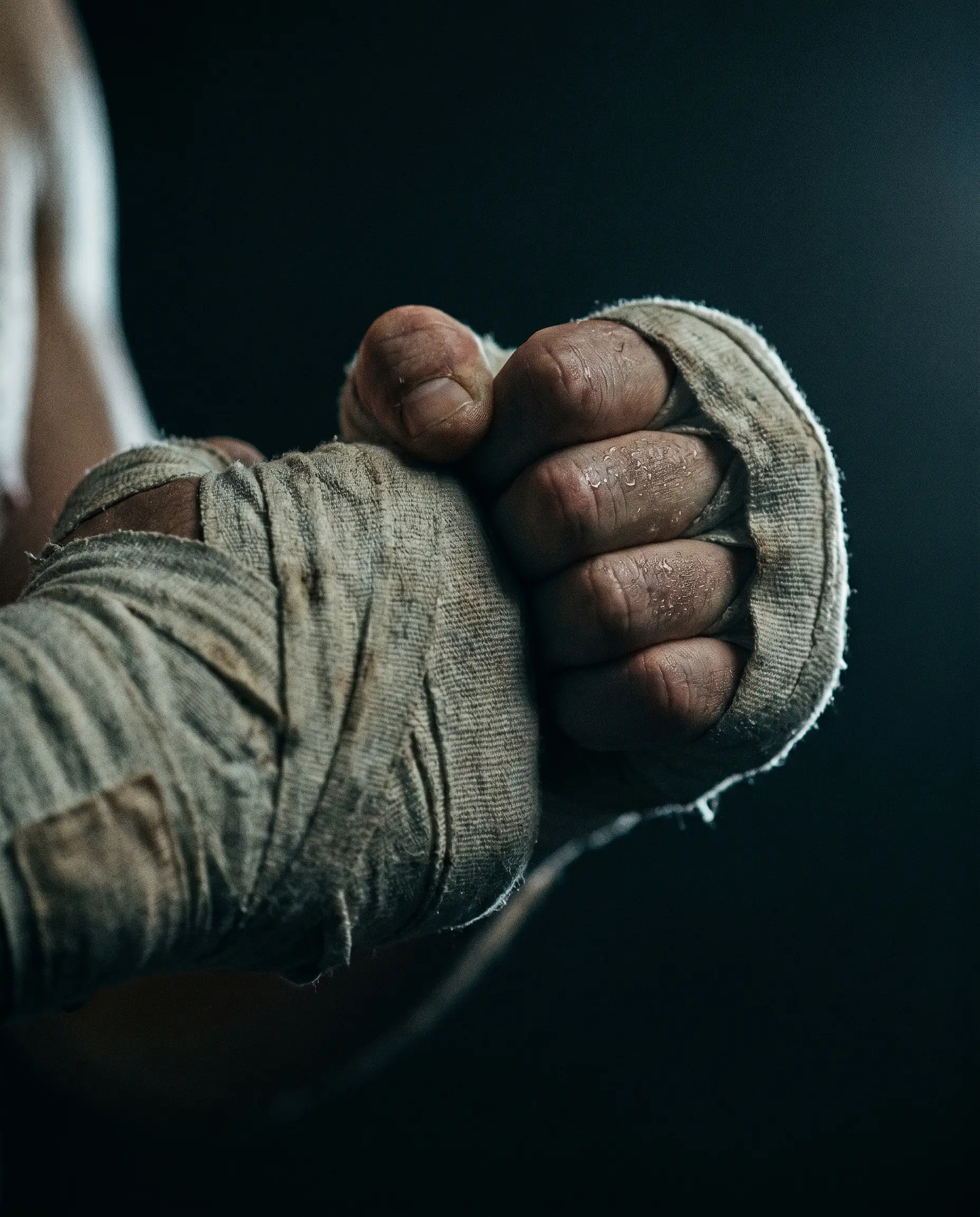
The beginner truth For your first months — bagwork, footwork drills, classes — flat-soled trainers are fine. Nobody ever failed to learn a jab because of footwear. The gear that matters early is wraps and gloves; shoes can wait.
The one real footwear mistake Cushioned running shoes. Thick soft soles are built to absorb impact in a straight line — the exact opposite of what boxing needs. They mute your connection to the floor, wobble under lateral movement, and their grip catches mid-pivot. If your current shoes are marshmallows, switch to something flatter today, even a basic flat sneaker.
When boxing shoes start earning their price The moment sparring gets regular: - Pivot-friendly grip — turn without your sole catching (ankle-saver). - Thin soles — you feel the floor, and balance plus force transfer improve noticeably. - Ankle support — high cuts stabilize the joint through lateral explosions. - Weight — they nearly disappear on your feet, and light feet last more rounds.
The honest buying rule Boxing shoes are a commitment reward, not an entry fee. Earn them with three consistent months, then enjoy how different real floor feel is.
Nobody was ever outboxed by a shoe. But plenty of ankles were saved by one.
Sort what actually matters first: your plan, then your gear.
FAQ
Can I box in normal trainers?+
For bagwork, drills and classes — absolutely, as long as the sole is relatively flat and clean. The one genuinely bad choice is cushioned running shoes: soft thick soles compromise balance and catch during pivots.
What makes boxing shoes different?+
Thin soles for floor feel, grip patterns designed for pivoting rather than straight-line traction, lightweight construction, and higher cuts for ankle support during lateral movement — all optimized for how boxers actually move.
When should I buy my first pair?+
When sparring becomes regular or your first competition appears on the calendar. That's the point where pivot grip and ankle support stop being luxuries and start being safety equipment.
Make it personal to your fight.
Run the free Fighter Check — get your archetype, your Performance System Map and a plan built on what you just read.
Get my System Map →