How Four Ancient Cultures Built Warriors — and What Science Kept
Historical inspiration · traditions honestly compared with modern sports science
Greek strength, Chinese breath, Japanese repetition, Indian mobility — four traditions, one convergence. Cultural inspiration, cross-checked against modern training science.
The BOXING OS Desk · Jul 3, 2026 · 6 MIN READ
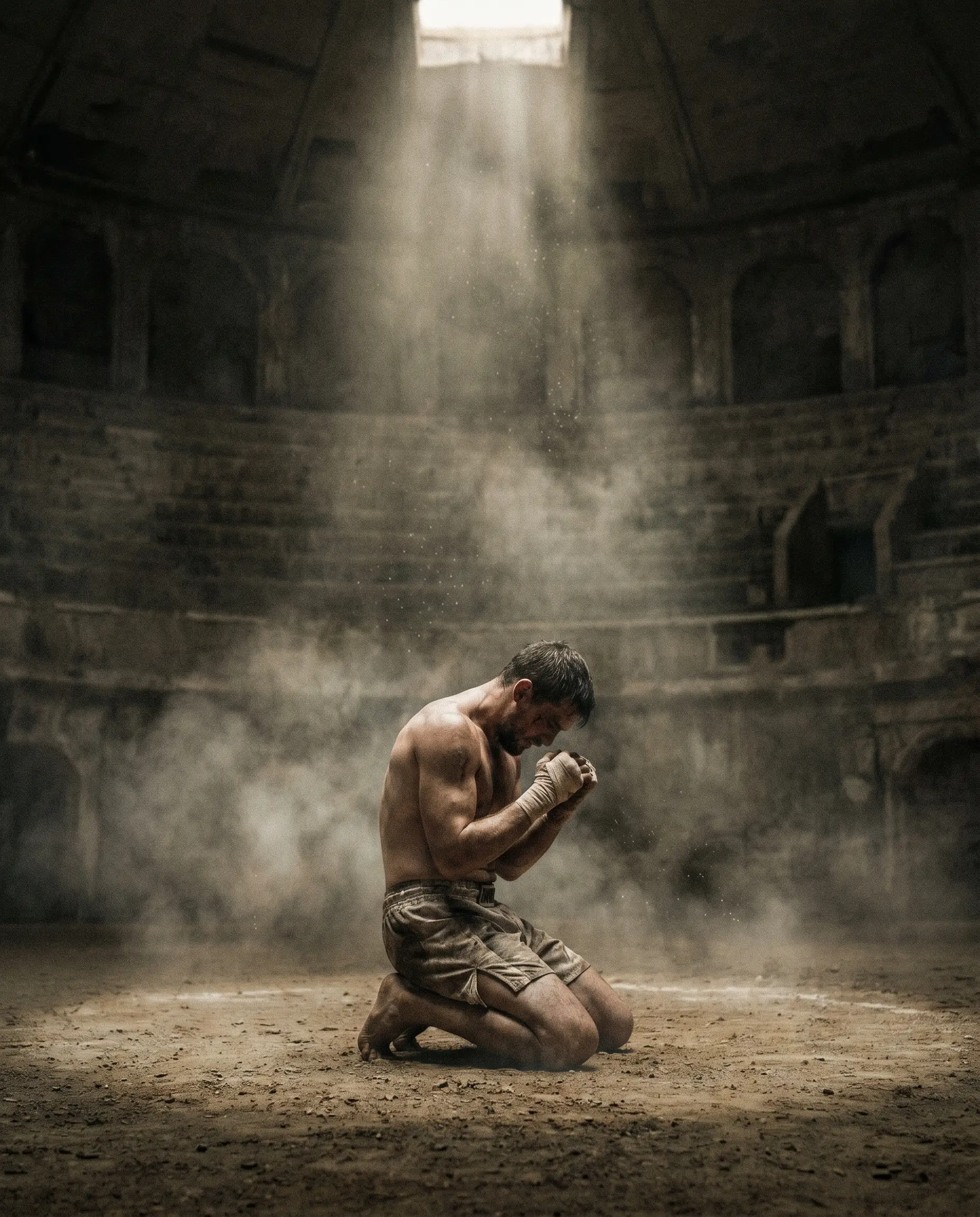
- ✓Four cultures, four methods — and a shared core: consistency, movement quality, breath, discipline.
- ✓Greece gave us progressive overload's founding legend; the principle survived, the mythology didn't.
- ✓Japanese kata is deliberate practice by another name — repetition with total attention.
- ✓Chinese and Indian traditions centered breath long before science measured why it matters.
- ✓The honest read: traditions converged on WHAT works; science explains WHY — and prunes what doesn't.
Four great traditions prepared fighters in strikingly different ways: ancient Greece systematized strength and endurance (progressive overload has roots in the legend of Milo), Chinese martial arts emphasized balance and breath control, Japanese arts built mastery through disciplined repetition (kata) and mental composure, and Indian traditions like Kalaripayattu and traditional wrestling developed mobility, controlled breathing and daily practice. Modern sports science explains these ideas differently — and rejects parts of each — but the convergent themes survive scrutiny: movement quality, consistent practice, recovery, breath, and mental discipline.
How to read this: historical and cultural inspiration, cross-checked against modern sports science. Where the old and new agree, we say so; where they don't, we say that too.
Every civilization that fought — which is every civilization — built a system for making fighters. Put four of the great ones side by side and something interesting happens: the surfaces differ wildly, and the core barely moves.
Greece: the load The Greeks systematized physical preparation like they systematized everything — gymnasia, coaches, periodized preparation for the games. Their gift to the modern weight room is a legend: Milo of Croton, carrying a calf daily until it was a bull. Strip the myth and you have progressive overload, the single most confirmed principle in strength science. The mythology retired; the principle runs every serious program on earth.
China: the breath Chinese martial traditions put breath and balance at the center — control the breathing, control the state, control the movement. The metaphysical explanations don't survive the lab. The practice largely does: modern research on slow breathing, heart-rate variability and arousal control keeps finding that the old masters were regulating something real, whatever they called it.
Japan: the repetition The Japanese arts built warriors through kata — forms repeated thousands of times with total attention, under a discipline that treated sloppiness as disrespect. Rename it and it's deliberate practice, the modern gold standard of skill acquisition. The dojo knew: the rep only counts if the mind attends it.
India: the mobility Kalaripayattu and the akhara wrestling tradition trained mobility, breath and daily ritual — bodies built to move through full ranges, practice as devotion. Modern movement science, after a long detour through machines, has circled back to trainable range of motion as a foundation.
The convergence — and the pruning Four cultures, no contact, same conclusions: move well, breathe deliberately, repeat with attention, recover, show up daily. That convergence is the credible inheritance. The rest — the mysticism, the brutal austerities, the toughening rituals that were just damage — science retires without regret. Honoring tradition doesn't mean keeping everything. It means keeping what converged.
The ancients found the what. Science found the why. You get both.
The Learning Journey is our version of the old roads — nine stages, attention required.
FAQ
Did ancient warriors really train better than modern athletes?+
No — modern athletes, with sports science, nutrition and recovery knowledge, outperform every era before them. What the ancients had was time-tested intuition about fundamentals: consistency, movement quality, discipline. The traditions deserve respect as origins, not as superior secrets.
What is the connection between kata and modern skill training?+
Japanese kata — precise forms repeated with full attention — anticipates what motor-learning research now calls deliberate practice: focused repetition with a quality standard. The vocabulary changed; the training insight held up remarkably well.
Which ancient practices does modern science NOT support?+
Plenty: mystical energy explanations, extreme austerities, some traditional 'toughening' methods that just accumulate damage. Honest tradition-keeping means keeping the convergent fundamentals and letting the disproven parts retire with honor.
Related systems
Make it personal to your fight.
Run the free Fighter Check — get your archetype, your Performance System Map and a plan built on what you just read.
Get my System Map →