Tyson's Peek-a-Boo, Explained: The System Behind the Terror
It looked like chaos. It was choreography — a defensive system that manufactured knockouts for a short man in a tall division.
The BOXING OS Desk · Jul 2, 2026 · 6 MIN READ
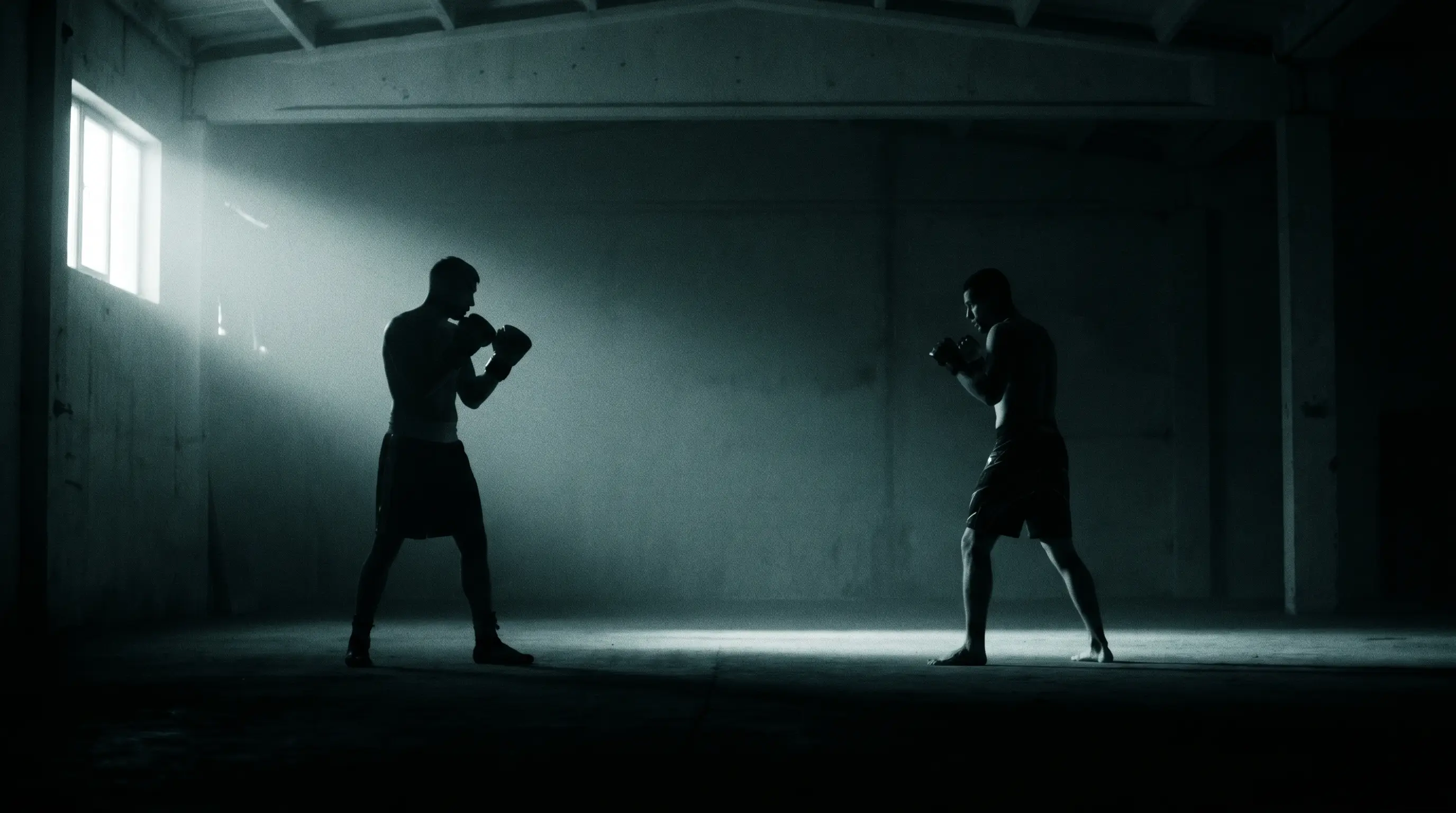
- ✓Peek-a-boo is a system, not a guard: high hands, rhythmic head movement, and angled entries working as one machine.
- ✓Defense IS the offense — every slip loads a counter from underneath.
- ✓It solves the short fighter's problem: getting inside long arms without paying the toll.
- ✓The style burns fuel — it lives and dies on conditioning and leg endurance.
- ✓The takeaway for anyone: stitch your defense and your counters into single movements.
The peek-a-boo is a complete boxing system built around a high, tight guard (gloves at the cheeks), constant head movement on a rhythm, and explosive weight transfers that let a shorter fighter slip inside long punches and detonate hooks and uppercuts from underneath. Tyson's version, built by Cus D'Amato, tied number-coded combinations to slip patterns so defense and offense were the same motion. Its demands: elite conditioning, relentless leg drive, and head movement that never takes a round off.
The highlight reels sell the violence. Watch closer and you see the machine: a fighter who was almost never there when the punch arrived, and always there — closer than anyone wanted — when his own left hook left.
The problem it solved A shorter, shorter-armed man in a division of giants has one route to victory: inside. But the inside sits behind a toll gate of jabs and crosses. The peek-a-boo is a full system for running that gate without paying.
The machine's parts The guard. Gloves at the cheekbones, elbows sealing the body, chin welded down. Not a shell to hide in — a launch platform that keeps the hands pre-loaded next to the targets they'll counter to.
The metronome. The head moves on rhythm — slip, slip, weave — before punches come, not in reaction. An opponent aiming at that head is aiming at where it was.
The entries. Each slip carries the feet forward a few inches. Three slips and the distance is gone — and the man arrives with his hips already coiled.
The payoff. From underneath: hooks and uppercuts thrown with full leg drive, in bunches, to body and head in the same burst.
The price tag Every second of it costs fuel. Legs bent, torso moving, explosions on demand — the style has no coasting gear. That's the honest reason it's rare: it's not a technique you learn, it's an engine you build.
Chaos for the audience. Clockwork for the man inside it.
The peek-a-boo pressure system breaks the entries and slip-counter patterns into trainable rounds.
FAQ
What is the peek-a-boo style?+
A boxing system where the gloves ride high at the cheeks, the chin stays tucked, and constant rhythmic head movement carries the fighter inside long punches — where short, explosive hooks and uppercuts do the damage. Defense and attack are one motion.
Why don't more boxers use peek-a-boo?+
It's expensive. The style demands extraordinary conditioning, non-stop head movement and explosive legs for entire fights — attributes most fighters can't sustain. When the movement stops, the high guard alone isn't enough.
What can I steal from the peek-a-boo?+
The principle that defense should load offense: practice slipping into punching position rather than away from it, and tie one counter to each defensive move until they're a single motion.
Related fighters
Related systems
Make it personal to your fight.
Run the free Fighter Check — get your archetype, your Performance System Map and a plan built on what you just read.
Get my System Map →