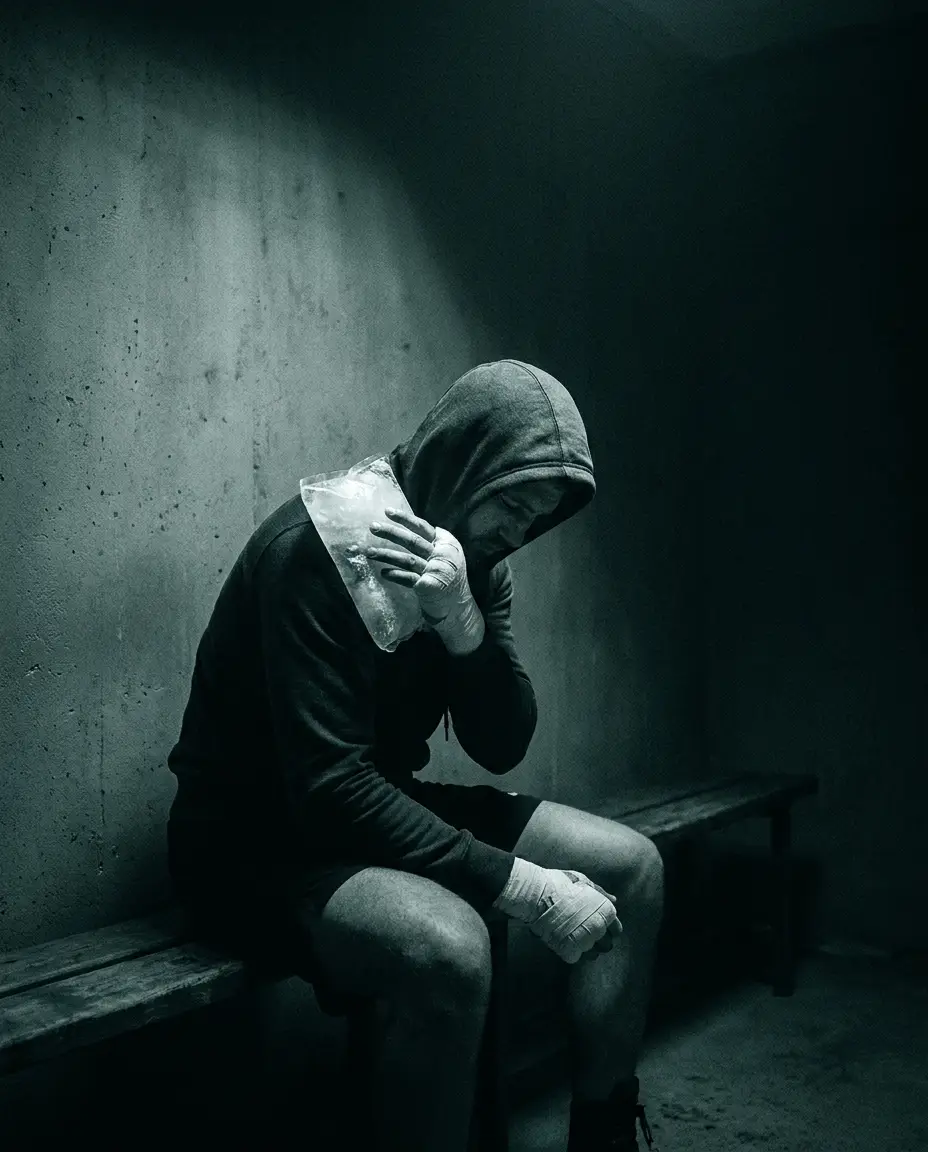
Sleep: The Only Legal PED Nobody Bothers Taking
Reaction time, punch resistance, learning speed, weight control — every fight variable runs through the pillow. The fighter's sleep manual.
The BOXING OS Desk · Jun 26, 2026 · 5 MIN READ

- ✓Reaction time is the first casualty of short sleep — in a sport measured in tenths of seconds.
- ✓Skill learning consolidates during sleep: yesterday's sparring becomes ability overnight.
- ✓Short sleep disrupts hunger hormones — the weight cut gets harder while you're worse.
- ✓8–10 hours including naps is the athlete evidence zone; the 30–90 minute nap is a weapon.
- ✓Anchor the wake time, cool the room, kill the screens — boring fixes, compound returns.
Sleep is the highest-leverage recovery tool in combat sports: short sleep measurably slows reaction time, degrades decision-making, reduces pain tolerance, weakens learning of new skills (sparring's whole point), disrupts appetite hormones (fighting the weight cut), and raises injury risk. Fighters should target 8–10 hours including naps, anchor a consistent wake time, keep the room cold and dark, cut caffeine 8+ hours before bed, and treat the pre-sleep hour as a shutdown ritual. In camp, sleep extension is a documented performance enhancer.
If a supplement did what sleep does — sharper reactions, faster learning, better body composition, higher pain tolerance, fewer injuries — it would be banned by Tuesday. It's free, and it's the first thing every fighter sacrifices.
What the deficit costs Run a fighter short on sleep and the losses map perfectly onto the sport's decisive variables. Reaction time dulls measurably — in a game of tenths. Judgment degrades before the fighter notices (fight IQ leaks silently). Pain tolerance drops, so the same body shot reads louder. Learning breaks: the technical corrections from yesterday's sparring consolidate during sleep — cut the night short and the lesson partially unhappens. And the hunger hormones invert, sabotaging the cut from inside.
The fighter's protocol - Volume: 8–10 hours including naps. Athletes aren't average people; training is damage on a schedule. - The anchor: same wake time daily — the body's clock trains like everything else. - The cave: cold room, blackout dark, phone charging somewhere it can't testify. - The runway: last hour before bed is shutdown — dim, slow, screens off. Sleep is approached, not crashed into. - The nap: 30 or 90 minutes (not the groggy in-between) turns double-session days from attrition into adaptation.
Camp math Sleep-extension studies on athletes are almost embarrassing: add an hour, and speed, accuracy and reaction times improve within weeks. It's the cheapest gain in sport.
Hard training breaks you down. Sleep is where the fighter gets rebuilt slightly better.
The readiness system tracks your sleep against your training load and adapts the day.
FAQ
How much sleep do fighters need?+
Athlete research points to 8–10 total hours including naps — more than the general population, because training is exactly the kind of stress sleep repairs. Sleep-extension studies show measurable gains in speed, accuracy and reaction time when athletes add an hour.
Do naps actually help training?+
Yes — 30 minutes (alertness without grogginess) or a full 90-minute cycle between sessions restores reaction time and supports the skill consolidation double-session days demand. Fighters on two-a-days should treat the nap as part of the program.
Why is sleep important for the weight cut?+
Short sleep skews appetite hormones (more ghrelin, less leptin), raising hunger and cravings exactly when a fighter is running a deficit — and it biases weight loss away from fat. The same camp is leaner and less miserable on full sleep.
Make it personal to your fight.
Run the free Fighter Check — get your archetype, your Performance System Map and a plan built on what you just read.
Get my System Map →