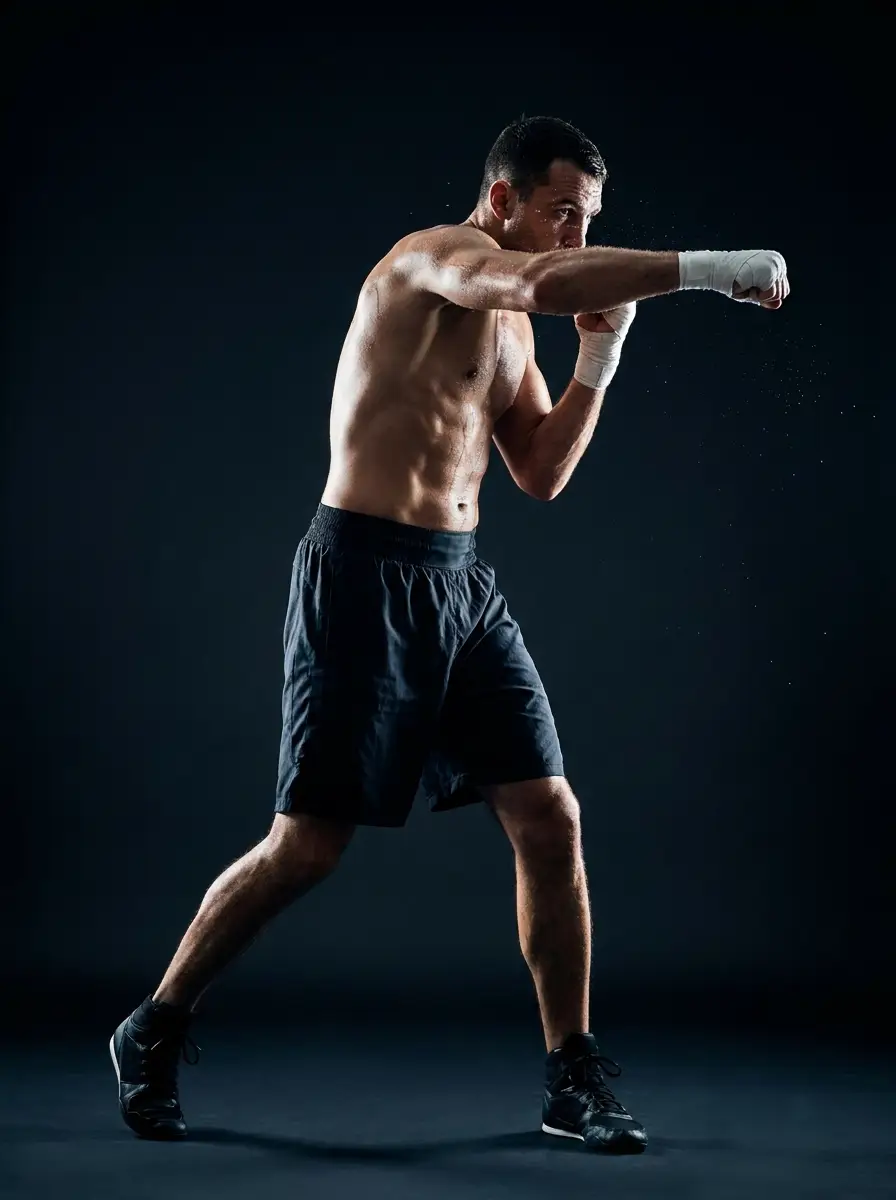
The Pacquiao Angle: In, Out, and Gone Before the Reply
The southpaw blitz that rewired what pressure could look like — speed as a delivery system for geometry no one had mapped.
The BOXING OS Desk · Jun 23, 2026 · 5 MIN READ
- ✓Enter on one line, exit on another — the reply always ships to the old address.
- ✓Speed in bursts, not streams: three-to-five-punch blitzes, then gone.
- ✓The angles multiply the speed: same combination, new geometry every entry.
- ✓It's a legs style: the darting costs marathon-level conditioning.
- ✓Steal the exit rule: every entry you make should already contain its escape route.
Pacquiao's style fused three things rarely found together: genuine blitz speed (multi-punch combinations arriving faster than reads), southpaw in-and-out footwork that entered on one line and exited on another, and constant lateral repositioning that meant every attack came from a slightly new address. The darting entries made him a pressure fighter with a matador's exposure time — in range for the burst, gone before the ledger balanced. Its engine: legendary training intensity and leg endurance.
Pressure fighting used to mean a tax: to give punishment you stood in punishment's range. Then came a southpaw who found the loophole — what if you were only in the fight during your own turn?
The burst economy The attacks came as bursts: three, four, five punches at a speed that outran recognition, launched from mid-range with a darting entry step. And then — the part that broke the tradition — gone. Not backward along the entry line, where every counter is mailed, but off at an angle, onto a new bearing, out of the exchange before the exchange knew it was mutual.
The address problem Between bursts, the feet never rested. A half-step left, a drift right — each new attack launched from coordinates slightly different from the last. Opponents build defense on repetition: the same entry, learned, becomes blockable. But the entries here never repeated their geometry. Same punches, new address, all night. Their counters kept shipping to where the fight used to be.
The engine bill None of this is free. Darting entries and perpetual repositioning burn legs at a rate flat-footed styles never pay. The training-intensity legends exist because the style demanded them — the angles are written checks the roadwork has to cash.
He didn't stand in the fight. He visited it, violently, on a schedule only he had.
The speed-and-angles blocks train burst entries with the exit built into the combination.
FAQ
What made Pacquiao's style unique?+
The combination of blitz-speed punching with in-out southpaw footwork. He pressured like an aggressor but was exposed like a counter-puncher — in range only for the duration of his own burst, exiting on a different line than he entered so returns found empty space.
Why do they say he attacked 'from angles'?+
Because between bursts he repositioned laterally, so each blitz launched from a slightly different bearing. Opponents defending the last entry's geometry were always one address behind the current attack.
What should I copy from Pacquiao?+
The exit discipline. Before entering range, know your out — a lateral step, not a straight retreat. Drill entries in shadowboxing where the combination's last beat IS the exit step. In, work, gone.
Related fighters
Related systems
Make it personal to your fight.
Run the free Fighter Check — get your archetype, your Performance System Map and a plan built on what you just read.
Get my System Map →