Crawford's Switch: Fighting a Man Who Won't Stay One Fighter
Mid-round, mid-exchange, sometimes mid-combination — how stance-switching became boxing's most complete competitive advantage.
The BOXING OS Desk · Jun 25, 2026 · 5 MIN READ

- ✓The switch deletes your homework: every pattern read resets when the stance flips.
- ✓He's complete both ways — switching without full two-sided skill just donates your best weapons.
- ✓Stance changes re-aim the power hand at new real estate mid-fight.
- ✓It's also psychological escalation: the switch often announces that the measuring is over.
- ✓For mortals: train both stances in shadow years before trying it in sparring.
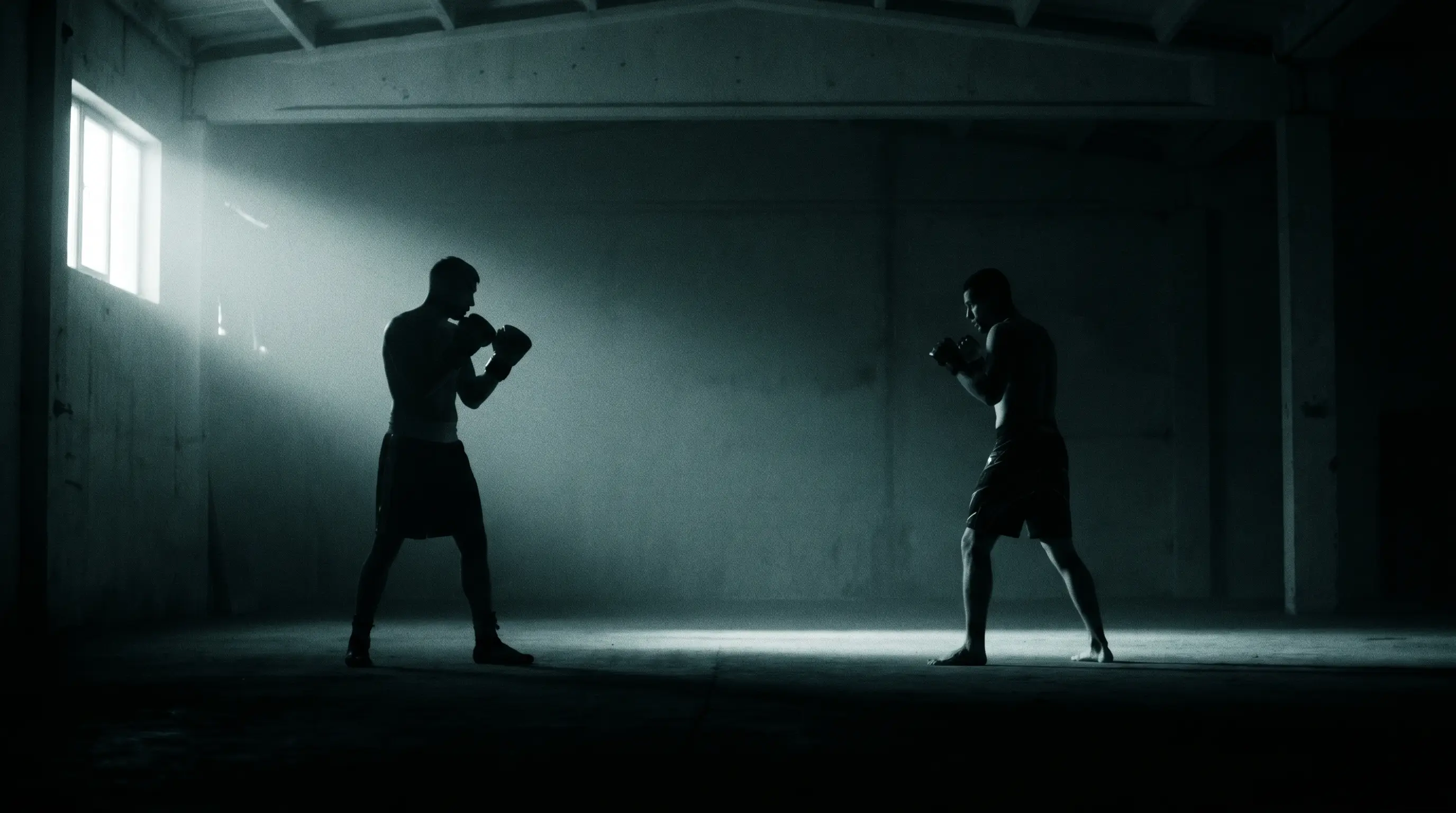
Crawford's switch-hitting works because he's genuinely complete in both stances — not an orthodox fighter who visits southpaw, but two whole fighters sharing one body. The switch resets every read an opponent has built: angles reverse, the power hand changes address, and patterns collected over rounds become obsolete mid-fight. He typically switches to sharpen a specific matchup edge (often to southpaw, putting his right hook on the opponent's centerline) and to escalate when he senses control slipping toward him.
Boxing preparation is fundamentally a study of one person. Camps are built on it: his lead hand, his exit direction, the habits under his habits. Now imagine the study object dissolving in the sixth round and being replaced by his mirror twin — same engine, same intelligence, everything else reversed.
What the switch actually breaks Not balance. Not technique. The file. Every fighter carries a live mental document of the man in front of him — which shoulder twitches before the cross, which foot to attack, where the exits are. A stance switch corrupts the whole document at once. The angles are reversed, the power hand has moved, the safe circle direction is now the wrong one. Opponents don't just face a new look; they face the deletion of every solved problem, with the clock running.
Two fighters, no discount The reason the trick is rare is that it's not a trick. A half-trained second stance is a gift to the opponent — your worst jab against their best counters. What makes the great switch-hitters different is the refusal of asymmetry: the southpaw version is a complete fighter, with its own jab, its own defense, its own timing. That's a career of doubled homework, which is exactly why it's a moat.
The tell inside the tell Watch when the switch comes: often just as control begins tilting — a punctuation mark that says the interview is over. The stance change is tactical and psychological in the same motion.
You can't out-study a man who is two syllabi.
The complete-fighter blueprint is where the doubled homework starts — shadow rounds in the second stance from week one.
FAQ
Why is switch-hitting so effective?+
Because opponents fight on pattern recognition. Rounds of reads — which hand leads, where the power comes from, which side to circle — all invert the moment the stance flips. Against a true switch-hitter, the file you built is about a fighter who just left the ring.
Why don't more boxers switch stances?+
Because competence isn't symmetry. Most fighters' second stance is a costume — weaker jab, slower feet, confused defense — and switching gifts the opponent a downgrade. Genuine two-stance completeness takes years of doubled training most careers never budget.
How do I start training switch-hitting?+
In shadowboxing only, for months: full sessions in your off stance until footwork, jab and defense feel native. Then bag rounds, then drilling, then finally sparring. The switch is earned in private long before it appears in public.
Related fighters
Related systems
Make it personal to your fight.
Run the free Fighter Check — get your archetype, your Performance System Map and a plan built on what you just read.
Get my System Map →